
Get in touch with TIME Company

A Practical Guide to Reading DN2 & DN3 Microbore Test-Hose Results

Hydraulic diagnostics documentation guide
The reading becomes more useful when the next reviewer can see its purpose, context, limits, and unanswered questions—not just a number or a product name.
DN2 & DN3 Microbore Test Hoses are often discussed as hardware, but a useful diagnostic conversation starts earlier: what was observed, why it was observed, and what the observation can and cannot answer. This guide is an educational reading-and-handoff framework. It does not select a hose, identify a connection, set a limit, or replace an approved equipment method.
Where a DN2/DN3 Test Hose Fits in a Diagnostic Reading
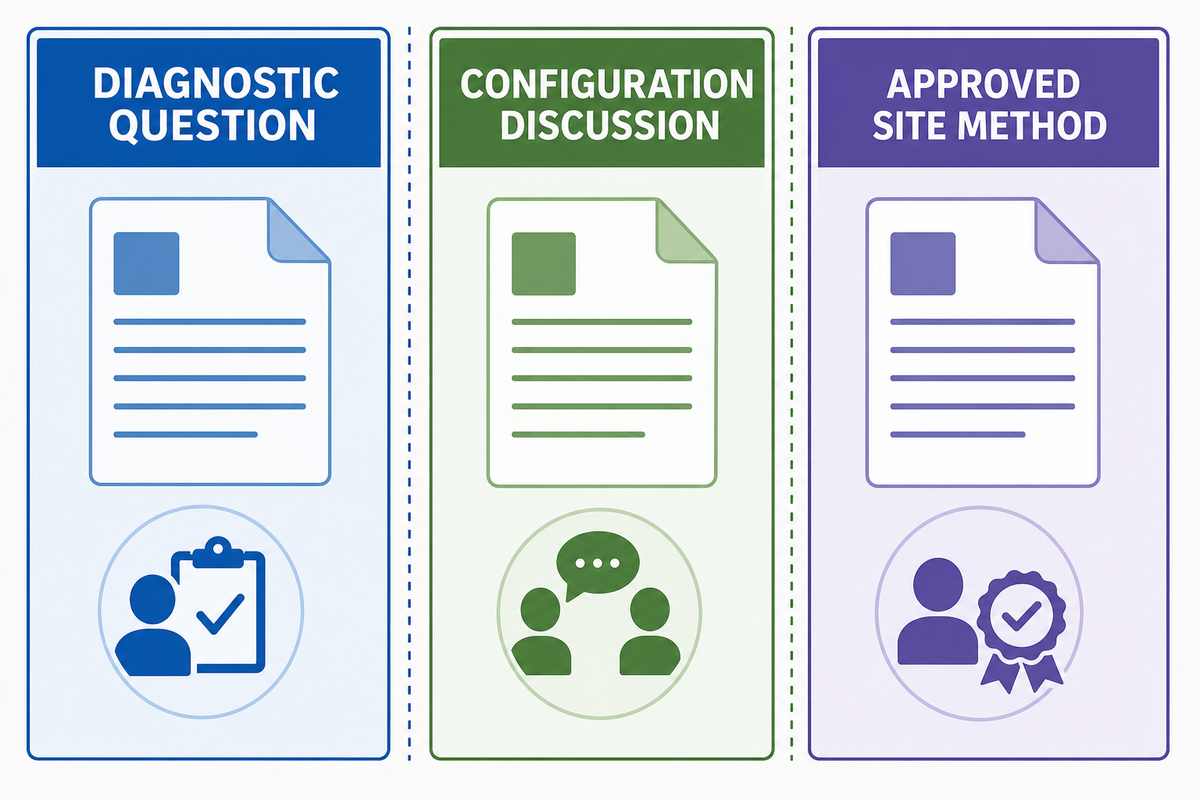
In a diagnostic path, a microbore test hose may sit between an instrument and system, but that fact does not make every question a hose-selection question. That boundary carries the scope note forward: distinguish the reading question from the configuration question before asking either one to do the other’s job. Teams may first need to understand a reading, compare it with a defined reference, or clarify what is unknown. Those are different jobs, and putting them into one request can blur responsibility.
| This guide owns | The solution page owns | The approved site method owns |
|---|---|---|
| The diagnostic question, observation context, unknowns, and handoff wording. | The product-specific configuration discussion. | How work is performed, checked, recorded, and accepted on the equipment. |
That separation is deliberate. The existing solution page can address a configuration request once the responsible reviewer has the relevant application facts. This article instead helps keep a live observation from being mistaken for a complete product brief or a completed test result.
Start with the Diagnostic Question, Not the Product Description
Before recording a reading, write the decision the observation is meant to inform. NIST’s maintenance-data case study notes that the intended end goal should determine data-quality requirements; it also shows how poor historical data can weaken later analysis. In practical terms, a record should begin with the question, not a generic label such as “pressure checked.” NIST’s case study concerns maintenance records rather than hose selection, which is exactly why it is useful here: it supports a documentation principle, not a product claim.
One neutral question might read: “What observation do we need in order to decide whether this issue should be compared, escalated, or passed to a configuration review?” It avoids assuming the cause, the condition of a component, or the suitability of a particular assembly. The answer may still be incomplete—and a clear question makes that limitation visible instead of hiding it inside a bare number.
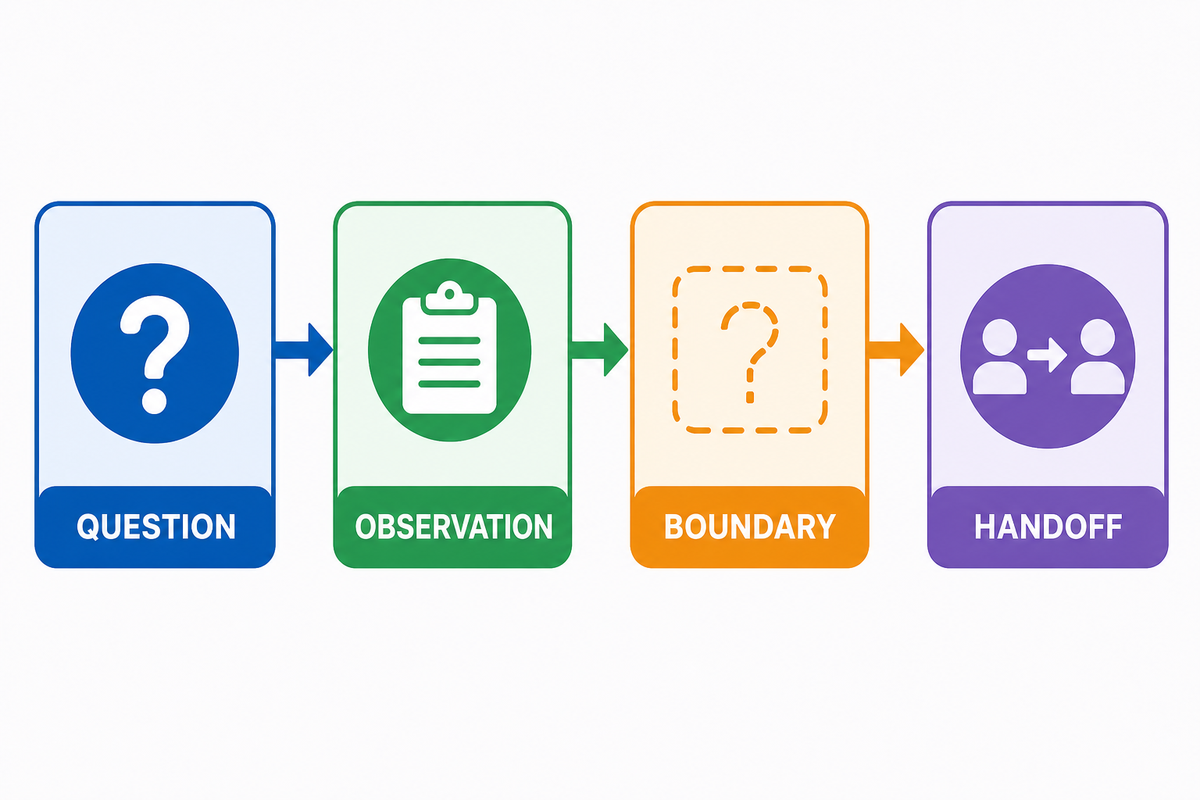
Question → what decision is pending?
Observation → what was seen in the stated situation?
Boundary → what remains unknown?
Handoff → who should review the next question?
Capture the Operating Context Around a Reading
Context is not decorative detail. With the decision question already stated, context preserves the information that lets that question survive a later handoff. Research on condition-based maintenance from Aalto University describes a chain from data collection through analysis to maintenance decisions, and identifies data quality as important to the downstream process. The lesson for a short field note is modest but valuable: preserve the facts that let a later reader understand what the observation was intended to mean. The study does not prescribe a universal hydraulic procedure, and neither does this guide.
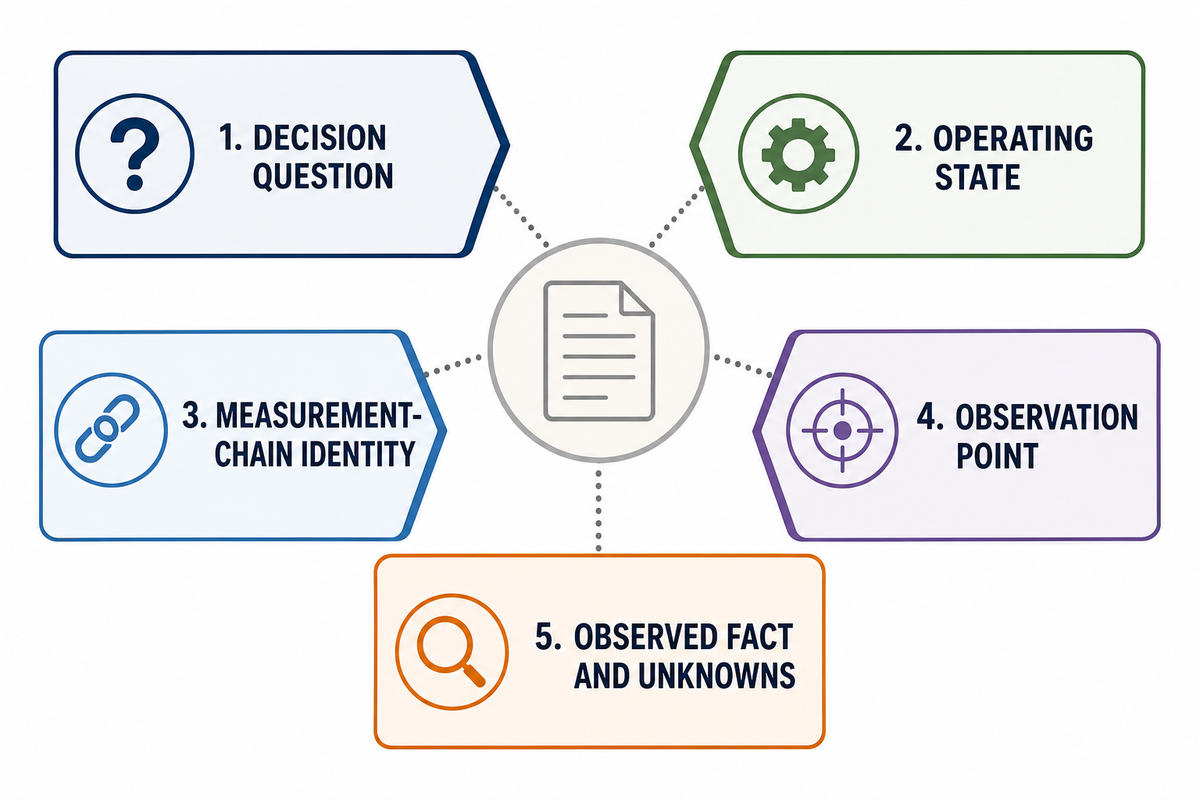
Use the following five fields as a plain-language handoff aid. They are not a formal test report, inspection record, calibration certificate, supplier drawing, or substitute for a machine-specific method.
| Field | What to preserve | What it does not establish |
|---|---|---|
| 1. Decision question | The decision or comparison the observation is meant to support. | Diagnosis or product choice. |
| 2. Operating state | The relevant machine or operating condition as known to the observer. | That two situations are automatically comparable. |
| 3. Measurement-chain identity | How the instrument and the observed system were identified for later review. | Calibration, accuracy, or dynamic-signal fidelity. |
| 4. Observation point | One clear description of where the observation relates to in the equipment context. | Connection instruction or interface confirmation. |
| 5. Observed fact and unknowns | What was directly observed, what was assumed, and what needs the next review. | Final cause, condition, or acceptance conclusion. |
The important habit is to label uncertainty rather than quietly filling it in. “Unknown” can be the most useful part of a handoff when it prevents the next person from treating an assumption as a verified fact.
The 5-Field Reading Context Framework: A Handoff That Preserves Meaning
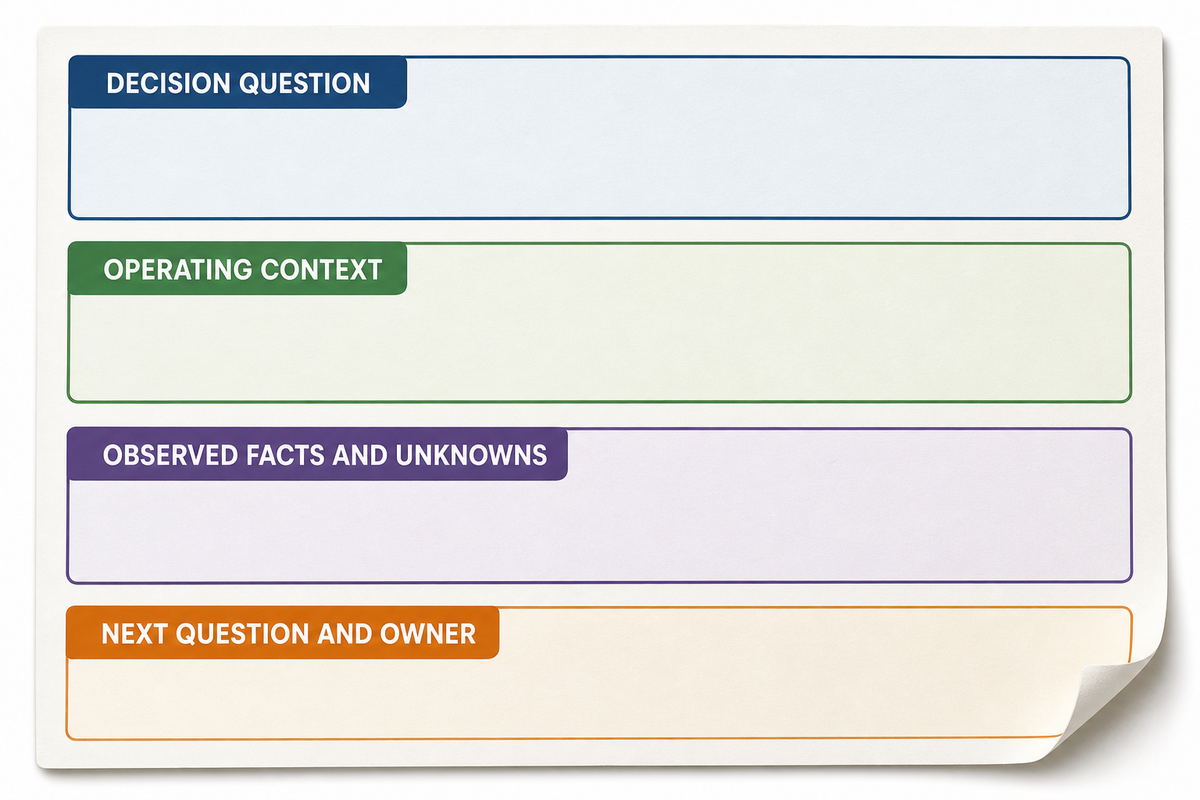
The Reading Context Note is a simple original framework for turning the five fields into a useful handoff. It is intentionally smaller than a formal report. Its purpose is not to certify work; its purpose is to keep a later conversation anchored to what was actually observed and to what still needs confirmation.
These fields work together rather than as a checklist of product attributes. A decision question without operating context can be misunderstood; an observation-point description without the question behind it may invite the wrong comparison; and an instrument label without the stated unknowns can make a record look more complete than it is. The framework therefore asks the recorder to preserve enough meaning for a reviewer to decide what kind of review is actually needed next.
When a relevant document already exists, identify it rather than summarizing or replacing it from memory. When no such document is available, say that plainly. This is a documentation discipline, not a demand to create a new procedure: the note simply prevents a later reader from assuming that missing evidence was available at the time of the observation.
Reading Context Note
- Decision question
- What decision or comparison is this observation intended to inform?
- Observed
- State only what was directly seen or recorded in the stated context.
- Context
- Identify the known operating state, observation point, and measurement-chain reference.
- Unknown or assumed
- Mark information that was not confirmed, instead of converting it into a conclusion.
- Next question and owner
- Say what needs review next and who is responsible for that review.
This format is consistent with the general concern raised by the NIST maintenance-data study and the Aalto research: later analysis is limited by the quality and meaning of the information it receives. It does not make the note a technical method. For example, it should never be used to imply that a reviewer has approved a configuration, that an instrument has been calibrated, or that an equipment condition has been proven.
The note also separates three different kinds of statement. First are observed facts: what the recorder can identify without extending the claim. Second are context facts: the labels or circumstances that help another reviewer locate the observation in the right conversation. Third are conclusions: statements that may require another method, comparison, document, or responsible owner. Keeping those categories apart makes it easier to see when a short record is informative and when it is being asked to carry more certainty than it contains.
That distinction is especially helpful when a note moves between maintenance, engineering, purchasing, and supplier contacts. Each reader may need a different next action, but none should have to reconstruct the original question from an isolated product term. The Reading Context Note preserves the starting point without pretending to resolve the technical decision.
Do Not Treat One Reading as Proof of a Complete Condition
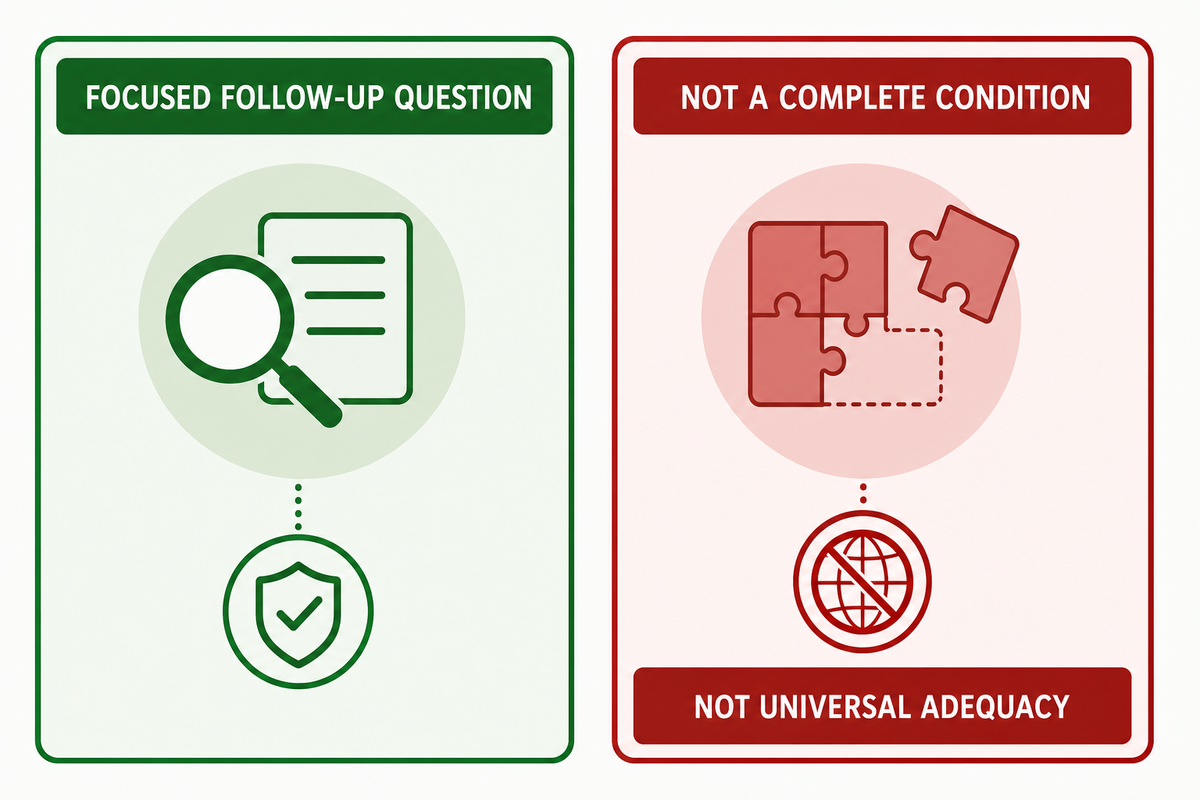
One observation can be valuable without being conclusive. A 2023 peer-reviewed study of hydraulic measuring hoses reports that a measuring hose is part of a measurement system and distinguishes average-pressure results from dynamic pressure-signal behaviour. Its relevance here is narrow: a context note alone does not establish how a measurement chain represents rapid or changing signals. It is a reason to pause for an approved measurement-chain review when that question matters, not a basis for giving hose dimensions, instrument settings, or configuration advice.
| A well-contextualized observation can support | It does not establish by itself |
|---|---|
| A focused follow-up question or a comparison request. | A complete equipment condition, root cause, or product suitability decision. |
| A clearer discussion of whether a defined method or specialist review is needed. | That the measurement chain is adequate for every dynamic question. |
| A record of the assumptions that need checking. | That an unknown configuration detail can be inferred from the observation. |
The broader evidence base makes the same caution reasonable. A 2025 NIST systematic review screened 465 relevant studies and retained 42 for detailed analysis, yet still found substantial reporting and evaluation differences. That figure is about the review corpus, not hydraulic-hose performance. It illustrates why comparison language should identify what is known, what is not comparable, and what must be reviewed under a defined method.
Before placing two observations side by side, ask whether they answer the same question and whether their recorded contexts are sufficiently clear to discuss. If the answer is unknown, the appropriate outcome is not a forced conclusion. It is a better handoff: identify the missing comparison basis, name the owner of the next review, and keep the original observation distinct from any later interpretation.
For the specific measurement-chain boundary, see the peer-reviewed hydraulic measuring-hose study. This guide takes no position on how any particular system should be configured.
Keep Live Diagnostic Observation Separate from a Defined Hose Test Method
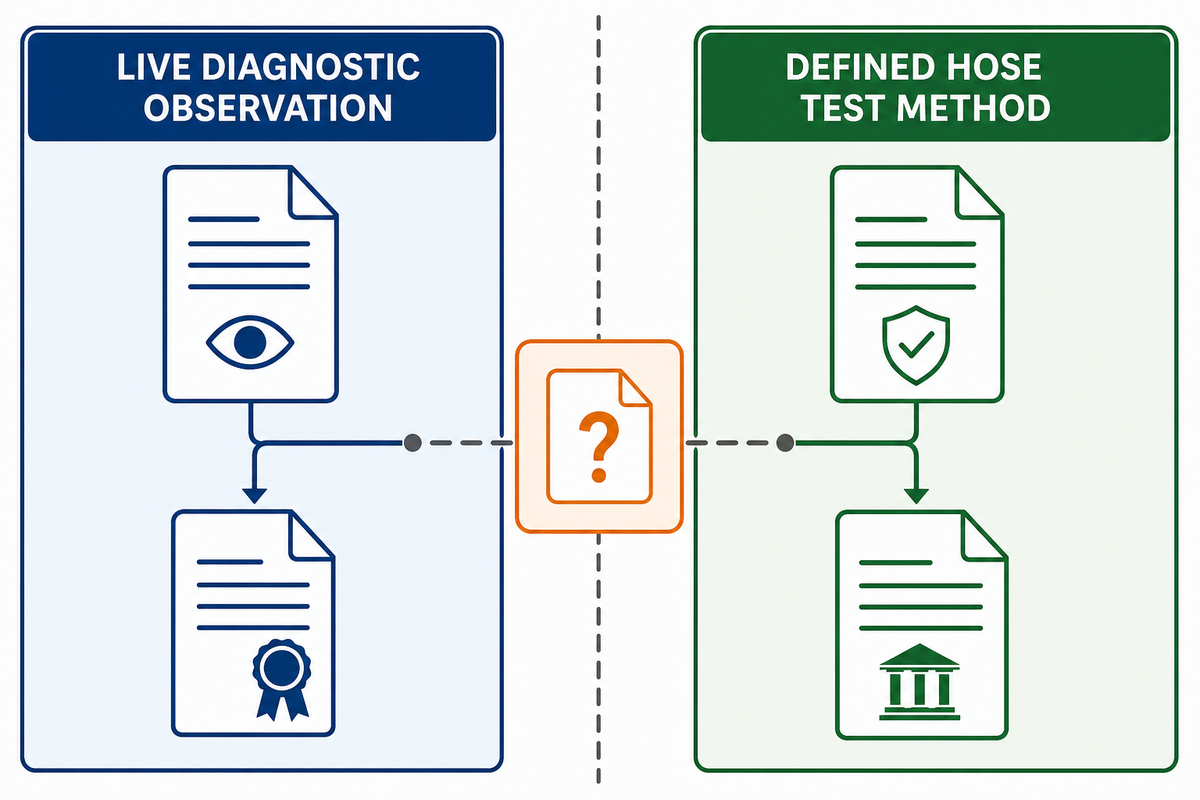
Live diagnostic observation and a defined hose test method answer different questions. That extends the measurement-chain boundary above: an observation may identify a question without becoming a defined test result. The official record for ISO 1402:2021 identifies a hydrostatic-testing method scope. The official record for ISO 6802:2018 identifies hydraulic impulse testing with flexing. Those scope statements are enough to preserve a useful distinction here; they are not an invitation to reproduce either method, criteria, duration, pressure, or acceptance condition.
| Live diagnostic observation | Defined hose test method |
|---|---|
| Preserves a situation, purpose, and observation for a follow-up review. | Must follow the applicable authority, equipment context, and approved method. |
| Can identify an unanswered question. | Cannot be inferred from this article or from an isolated observation. |
Keeping these categories separate protects the reader from a common documentation error: describing a live reading as though it were evidence that a formal method has been completed. If a defined test is required, the authoritative source and the responsible site process—not this guide—govern the work.
When a Reading Becomes a Test-Hose Configuration Question
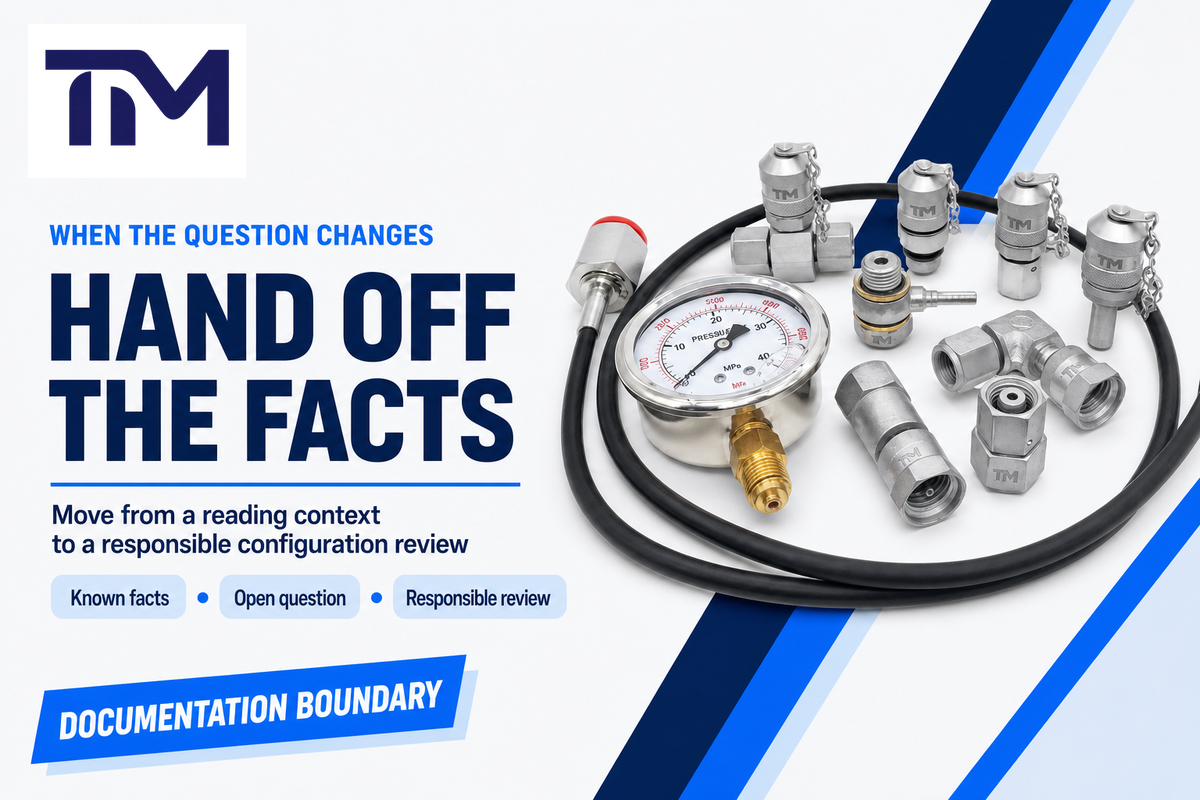
Pause the interpretation and hand the question onward when a missing configuration fact would change the next decision. Once a live observation has been kept separate from a defined method, the handoff should identify what is known and what is unknown, without guessing a bore, an end connection, a rating, a material, or a compatible system. Those are configuration questions, not conclusions from a reading.
- State the diagnostic question that remains open.
- Attach the Reading Context Note or its equivalent plain-language facts.
- Mark the configuration facts that have not been confirmed.
- Assign the next review to the responsible technical or supplier contact.
When the next step is to match the measurement task to a microbore hose configuration, use the dedicated solution page. It owns the commercial configuration discussion that this guide deliberately excludes.
Why Context Belongs in the Buyer Brief for the Next Review
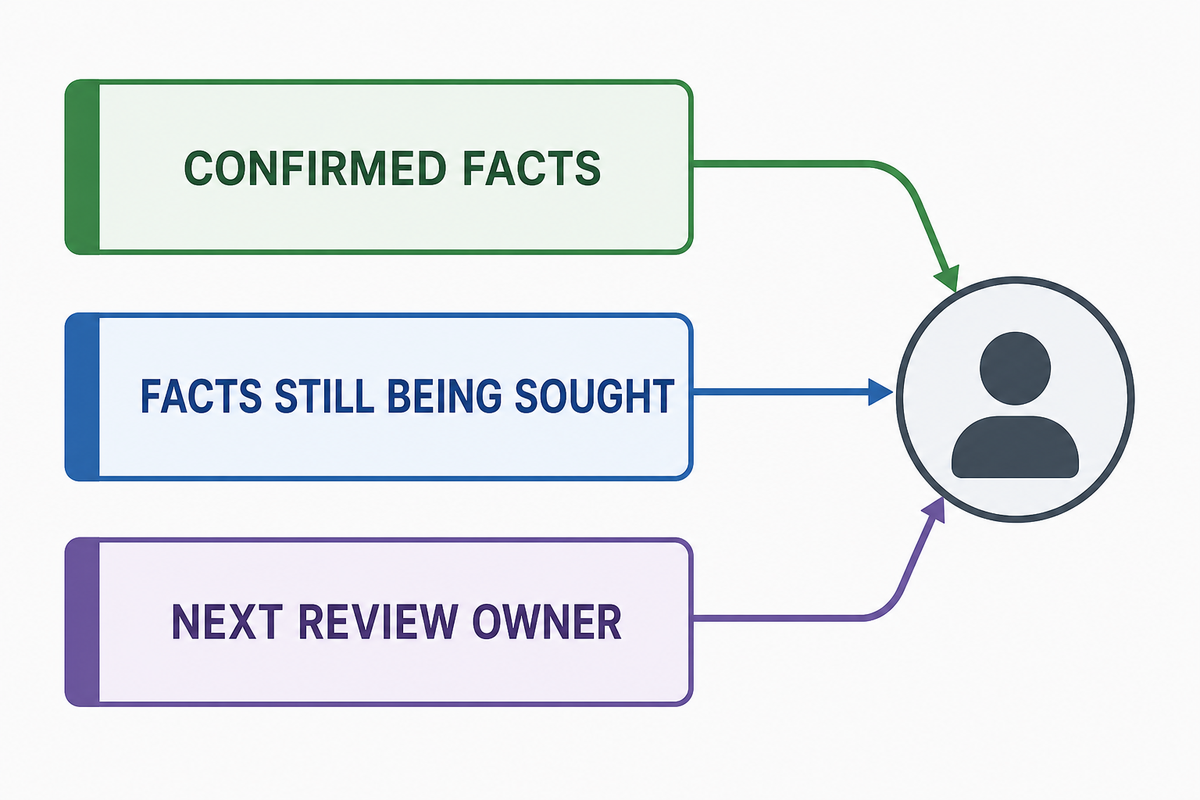
Buyers and maintenance leads do not need to turn a short handoff into a custom-assembly specification before the facts are ready. The first brief should preserve the decision question, the relevant operating context, the observation, the unknowns, and the owner of the next review. That lets a configuration discussion start from traceable facts instead of from a product name attached to an unexplained number.
This is an evergreen documentation principle, not a claim about a new market trend or a universal buying process. It also does not replace the documents that may govern a real request: approved equipment information, drawings, records, and the responsible reviewer’s instructions.
For a buyer brief, clarity is more useful than false completeness. State which facts are confirmed, which are still being sought, and whether the open question is interpretive or configuration-related. That keeps the brief within its role: it prepares a responsible discussion, rather than representing that the required engineering review, product selection, or approved method has already taken place.
It also gives the receiving reviewer a way to respond proportionately. They may be able to clarify a document reference, request a comparison basis, or identify that the question belongs with another owner. None of those outcomes requires the original observer to turn a diagnostic note into a technical specification. The handoff is successful when the next question is clearer than the last one—not when uncertainty has been hidden.
Frequently Asked Questions
Should I connect to a gauge or a port instead of a test point?
A reading-context guide does not give connection instructions. The measurement path depends on equipment design, instrument, and the approved site method. Preserve the diagnostic question and any known interface facts, then send the configuration question to the responsible reviewer. If the observation has been recorded, keep the reading separate from the unanswered hardware question. Later configuration review can use the documented context; this article cannot confirm a connection path, an interface, or conditions under which equipment should be handled.
Do I need test points and gauge adaptors as well as a microbore hose?
One microbore hose can be one element in a measurement path, but this article does not determine what other items are required. Confirm the equipment context and approved method, then pass the known facts and unknowns into the configuration review.
Can one pressure reading confirm that a hydraulic component is healthy?
No. One reading records an observation in a stated situation. It may support a follow-up question, but it does not alone establish a complete condition, cause, or configuration decision. A defined comparison, further observation, or specialist review may be needed.
What context should accompany a diagnostic pressure reading?
Preserve the decision question, relevant operating state, measurement-chain identity, observation-point description, and the observed facts versus unknowns. Treat the list as an information-handoff aid only; it is not a replacement for a site method, formal record, calibration requirement, drawing, or technical review.
PAGE & COMPANY CONTEXT
This page is intended to help industrial buyers understand a practical hydraulic diagnostic path: test point, microbore hose and pressure-gauge connection.
For the site’s published company background, visit About. For inquiry details, visit Contact; information-handling details are available in the Privacy Policy.
TIME HYDRAULIC / IKIN
Hydraulic test-connection context for business inquiries
- Manufacturing context
- Changzhou Time Machinery Technology Co., Ltd., Changzhou, Jiangsu, China.
- Trade and export context
- Shanghai Ikin Hydraulic Co., Ltd.
- Product focus
- Hydraulic test points, DN2/DN3/DN4 microbore hose assemblies and pressure gauge connectors.
Since 2017
The public About page describes production activity since 2017.
Site-stated scale
The public About page states a 5,000 m2 plant and supply to 40+ countries.
Site-stated controls
The public About page describes ISO 9001, SGS, 100% inspection and a three-year warranty.