
Get in touch with TIME Company

DN4 Hydraulic Test Hoses: A Selection and Safe-Use Guide

DN4 Hydraulic Test Hoses are a starting identifier, not a complete assembly decision. The label alone cannot establish the end connections, approved pressure and temperature conditions, fluid compatibility, route, instrument suitability, or safe work procedure for one machine. This guide helps maintenance teams, engineers, and buyers collect the evidence needed before they request a configuration review.
It is deliberately an educational guide, not a product datasheet. If you already have the machine-side information and need a current assembly review, use the DN4 hydraulic test hose solution page as the configuration handoff.
Published by TIME Hydraulic.
What Does DN4 Mean on a Hydraulic Test Hose?
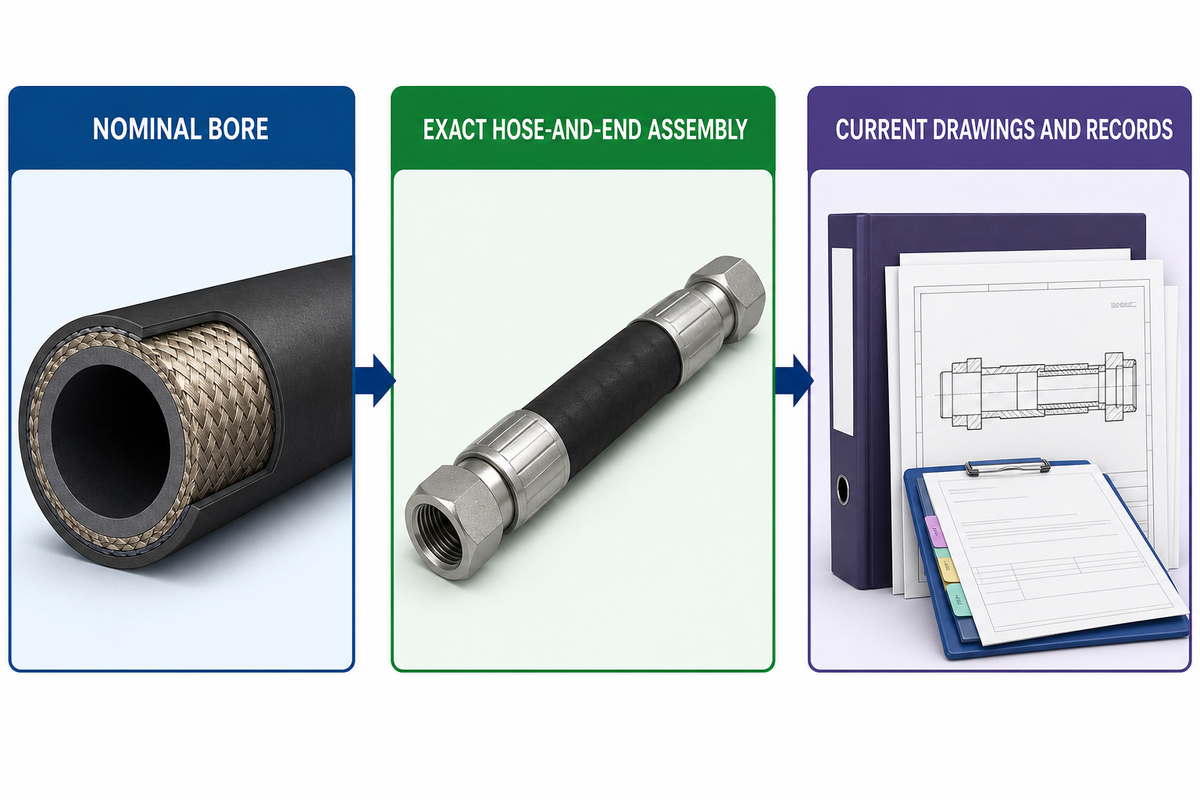
DN4 is a nominal-bore label used to describe a small hose size. It is useful for identifying the starting point of a conversation, yet it does not specify the ends, seal arrangement, length, hose construction, material compatibility, approved pressure range, temperature range, routing allowance, or instrument response needed for one real job.
That distinction matters because dimensional conformity is not, by itself, a performance guarantee. SAE’s diagnostic-coupling standard notes that permissible working pressure depends on material, design, working conditions, and application, and that dimensional conformity alone does not guarantee rated performance. Read the SAE J1502 diagnostic-coupling scope.
| What DN4 can help identify | What DN4 cannot establish alone |
|---|---|
| A nominal hose-bore starting point | The exact hose-and-end assembly |
| A topic for a supplier conversation | The machine-side interface or approved connection state |
| A possible space or handling question | Pressure, temperature, fluid, routing, or dynamic-measurement suitability |
Use the label to open the file, not to close the decision. Current drawings and records for the actual machine, coupling, hose, and instrument are what turn a nominal size into a reviewable assembly question.
Key takeaway
DN4 identifies a nominal bore; the safe purchasing or measurement decision belongs to the documented hose-and-end assembly, its conditions of use, and the approved machine procedure.
That is why the same label can appear in a purchasing note, a maintenance conversation, and a product catalogue without answering the same question in each setting. Buyers may use it to narrow the family; technicians may need it as one item in a connection record; and suppliers may need several additional fields before reviewing an assembly.
Good records keep those roles separate. They avoid the common but risky move of treating a familiar label, a photograph, or one older part reference as proof of an entire current assembly.
Catalogues may use vocabulary such as microbore hose, DN4 hose, compact, flexible, hose material, steel, stainless steel, adapter, installed, mechanical, or mobile. Those words can help locate the right documents for hose assemblies, but none is a safe configuration instruction on its own.
Search results may also use category terms such as hydraulic test fittings, hydraulic test coupling, or DN2 test hose. They can locate a document family, but they cannot establish compatibility for a particular DN4 assembly.
The selection risk is an incomplete assembly record, because a nominal label cannot show how the hose, ends, machine interface, and instrument are combined. Qualified reviewers should treat the current document set as the evidence boundary before any DN4 request becomes a configuration decision.
The DN4 Decision Boundary: What a Guide Can Explain—and What Needs Evidence
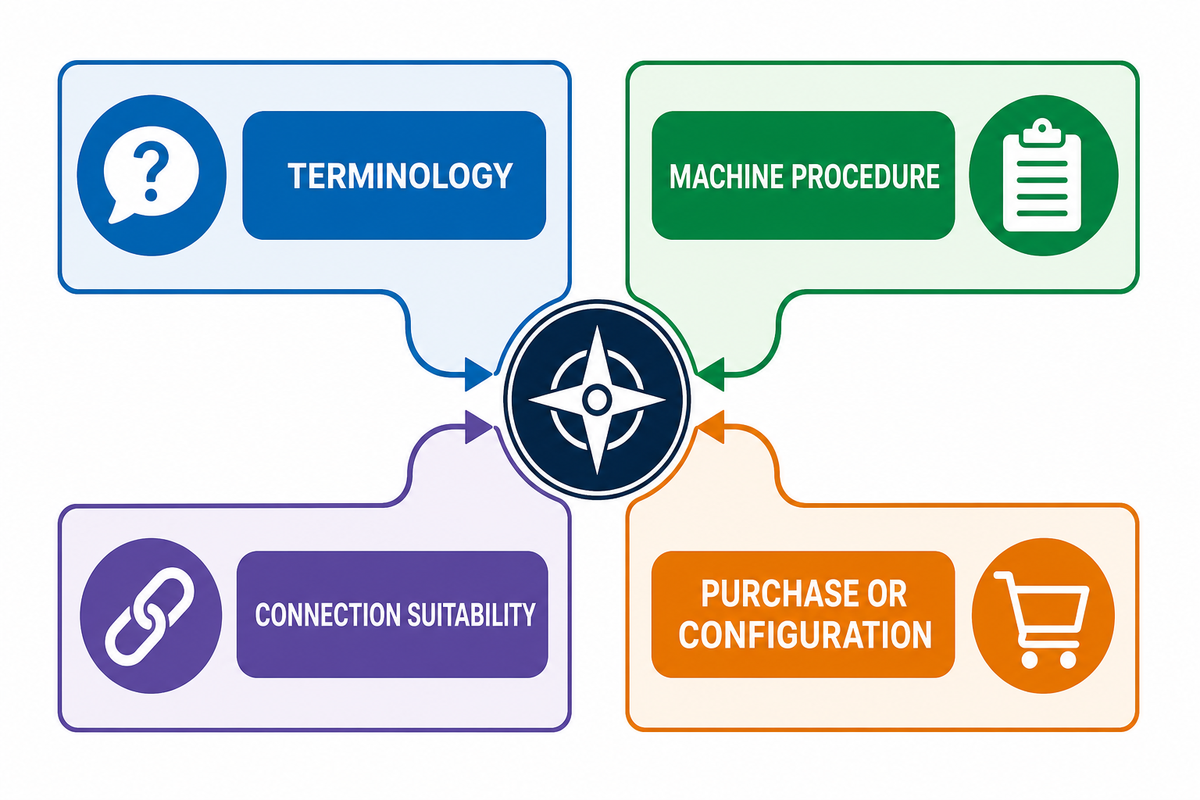
This guide can explain the questions that belong in a safe selection conversation. It cannot approve a connection, confirm a rating, or replace the equipment maker’s instructions for a live hydraulic system.
| Question type | What this guide does | What must provide the answer |
|---|---|---|
| Terminology | Explains why a nominal label is incomplete | Current assembly records |
| Machine procedure | Points out that the procedure is machine-controlled | OEM instruction and authorised site process |
| Connection suitability | Lists evidence to collect | Machine interface, coupling, hose, and instrument records |
| Purchase or configuration | Hands the prepared brief to a solution page or qualified reviewer | Current supplier drawing and application review |
This boundary also keeps the guide different from a DN4 solution page. The product page can deal with a current configuration request; the guide helps the reader avoid sending an incomplete request in the first place. When the evidence package is ready, the DN4 test-hose configuration page is the appropriate next step.
For example, “Can DN4 be used here?” is not one question. It may contain an interface question, a fluid question, a routing question, an instrument question, and a site-authorisation question; each answer has a different evidence owner.
The risk is an incomplete request, because each evidence owner controls a different part of the decision. SAE J1502 reinforces the boundary: a qualified review must connect a nominal label to the relevant component and application conditions, rather than treating one familiar term as an approval.
Start With the Measurement Task, Not the Catalogue Listing
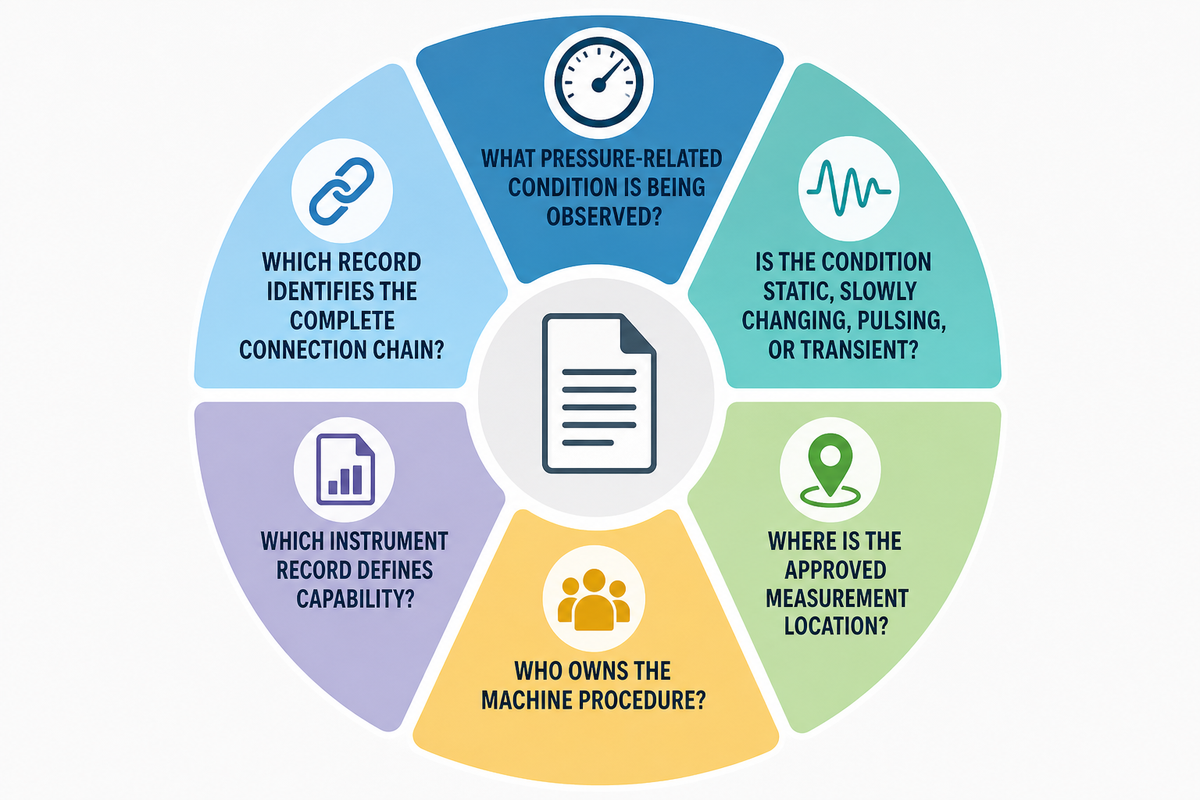
Before searching a catalogue, describe the measurement task. In an industrial maintenance setting, is the goal a static check, a routine service reading, a comparison between locations, or a transient or pulsating measurement where the instrument’s approved response characteristics may matter?
For a static check, the questions may focus on the approved interface, safe access, and correct records. For a changing-pressure measurement, do not infer signal quality from DN4, hose length, or a generic pressure boundary; confirm the approved instrument record and procedure for that measurement purpose.
The 6-Question Evidence Framework
- What pressure-related condition is being observed?
- Is the condition static, slowly changing, pulsing, or transient?
- Where is the approved measurement location?
- Which person or team owns the machine procedure?
- Which instrument record defines the required measurement capability?
- Which current drawing or record identifies the complete connection chain?
This is not an academic distinction. An open study of liquid-filled transducer-and-tube systems found that tubing length, diameter, material, fluid, temperature, and entrapped air can affect dynamic response in that study’s setup. That does not create a universal hose rule, but it is a sound reason to escalate transient work to the approved instrument record rather than treat a nominal bore as a response specification. See the open pressure-transducer study.
Keep the request proportionate to the task. For routine, approved static observation, the evidence package may differ from one used to compare rapid pressure changes, and neither situation is improved by a blog estimating a response limit from a bore label.
This creates a measurement risk because an instrument record can impose requirements that a nominal bore cannot represent. Qualified reviewers should distinguish a static observation from a response-sensitive test before applying any study value, including a result reported below 300 Hz.
DN4 and DN2 Are Not Interchangeable Labels
DN2 and DN4 are different nominal labels. Figures published for one bore, one hose series, one end combination, or one manufacturer’s test condition are not automatically evidence for another bore or assembly. ISO 11237:2025, for example, states a nominal-size scope from 5 to 76 for the hose assemblies it covers, which is a reminder to check whether a cited standard even reaches the nominal size under discussion. Check the ISO 11237:2025 scope.
Do not copy a pressure number, burst statement, temperature limit, bend-radius figure, hose-length rule, or response expectation from a DN2 listing into a DN4 request. Keep every value attached to its original manufacturer document, its exact assembly, and its stated application conditions.
When a DN2-versus-DN4 comparison is legitimate
Compare them only when a current document set identifies both constructions and the actual measurement task makes a comparison necessary for that exact, documented application. The output should be a documented configuration review, not a universal size chart created from mixed catalogue fragments.
This approach protects both the buyer and the supplier. It prevents a familiar nominal label from becoming a shortcut for an unverified performance claim.
The 8-Row Evidence-Class Matrix
The figures below are deliberately kept with their own source scope. They are not a DN4 specification table, and none should be copied into a request for a TIME Hydraulic assembly.
| Evidence class | Source-bound figure or scope | What it can support here |
|---|---|---|
| Diagnostic-coupling standard | 42 MPa appears in the scoped SAE J1502 coupling description | A reminder that a standard’s figure belongs to its stated component and conditions |
| Hydraulic-hose standard | ISO 11237:2025 covers nominal sizes from 5 to 76 | A reminder that one standard’s scope may not even include DN4 |
| Hydraulic-hose standard | Its oil-based-fluid scope states −40 °C to +100 °C | A reason to confirm the exact applicable construction and medium |
| Hydraulic-hose standard | Its water-based-fluid scope states 0 °C to +70 °C | A reason not to assume all fluid contexts are the same |
| Measurement research | The reviewed water-filled study examined response below 300 Hz | A reason to ask whether the measurement is static or dynamic |
| Measurement research | The same study reports a reference transducer natural frequency of 75 kHz | Research-apparatus context only, never a test-hose rating |
| Measurement research | Its example response time is 1 ms for a named test sensor | A reminder to consult the actual instrument record |
| Measurement research | A named study sensor has a 1.7 bar range and 0.25% full-scale linearity figure | Study-apparatus context only, never an assembly or system limit |
| Measurement research | That sensor’s stated compensated range is 0 °C to 50 °C | An example of why a sensor document has its own environmental scope |
| Measurement research | The study used 300 mm test lines with 1 mm, 2 mm, 4 mm, and 8 mm inner diameters | Evidence that changing transmission-line geometry can be a measurement question |
| Measurement research | Its data-acquisition setup sampled at 100 kHz | A test-rig detail, not a field requirement |
| Measurement research | The reported test temperature was 18 °C to 23 °C | A reminder that experimental context must not be treated as a universal operating range |
| Measurement research | The study’s calibration vessel had a 5.5 bar maximum operating pressure | Research-apparatus context only, never a hydraulic test-hose rating |
| Measurement research | That vessel was reported as 240 mm in diameter, 260 mm high, with a 3 mm wall | A reminder that test-rig geometry belongs to its stated research setup |
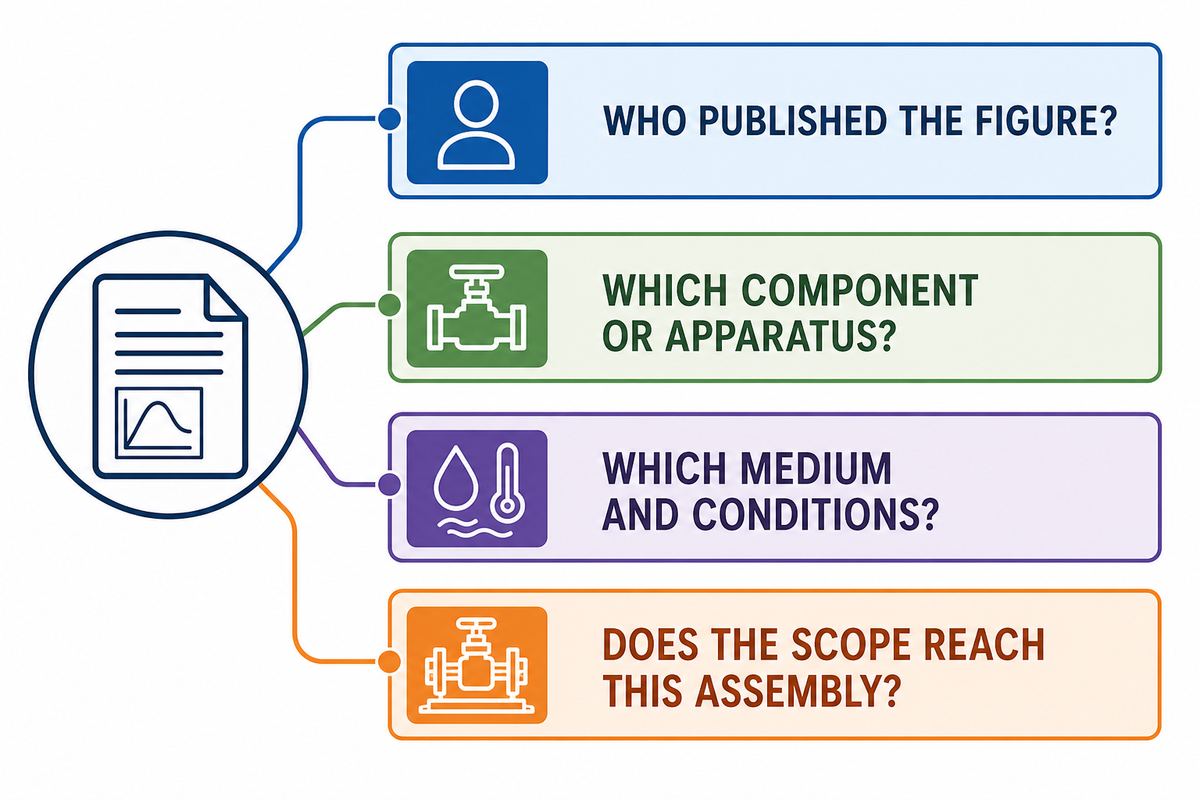
Source context matters as much as the number. The table demonstrates an evidence-reading habit: identify who published the figure, what component or apparatus it covered, which medium and conditions it named, and whether that scope actually reaches the assembly under review.
Do
- Keep each number tied to its source and stated conditions.
- Compare named assemblies only when current documents identify both.
- Escalate a missing interface or rating to the document owner.
Don’t
- Transfer a DN2 value into a DN4 request.
- Treat study apparatus figures as field-hose limits.
- Use a nominal bore to fill a missing specification.
The Pre-Measurement Brief: Six Questions Before a Gauge or Sensor Is Connected
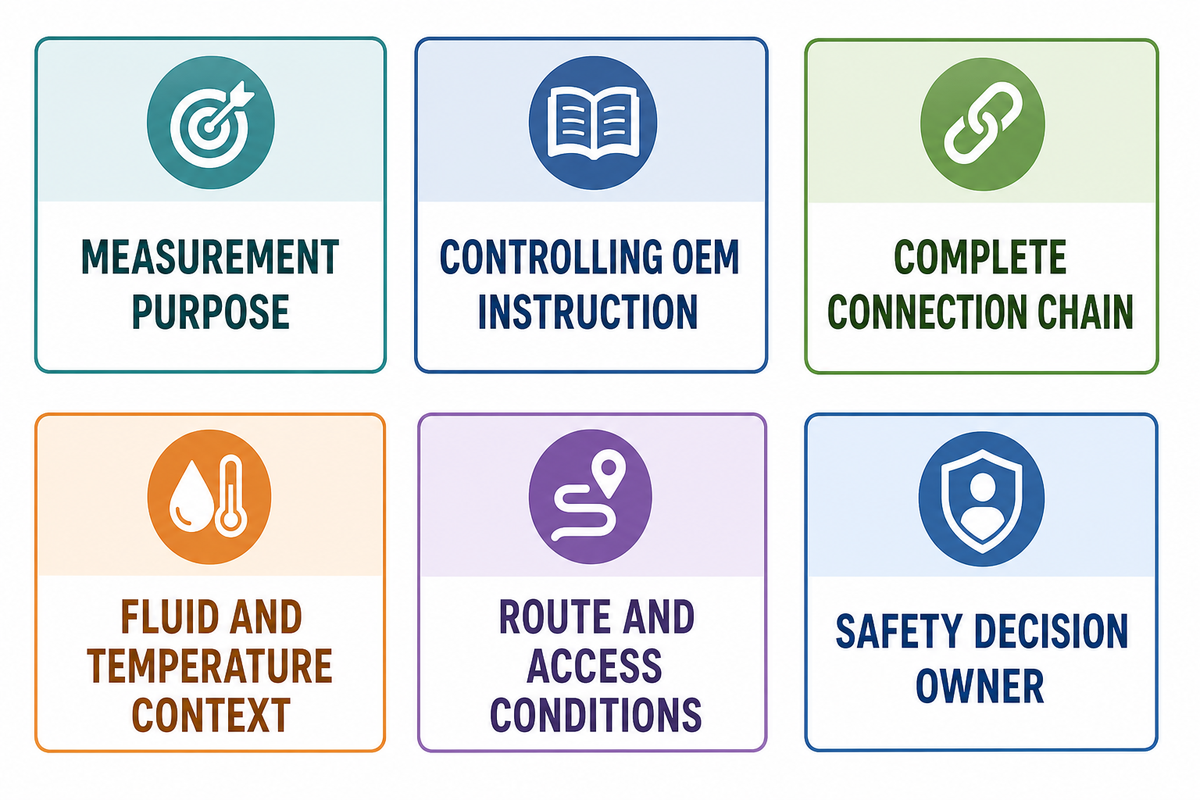
A short brief makes the handoff more useful than a one-line request for “a DN4 test hose.” The aim is not to configure an assembly from this page; it is to make missing evidence visible before anyone assumes a component is suitable.
- What is the measurement purpose? State whether the work is a static check, a service observation, or a changing-pressure measurement with instrument-response requirements.
- Which OEM instruction controls the job? Identify the applicable equipment instructions, approved measurement location, and authorised site procedure.
- What is the complete connection chain? Record the machine interface, test point or port, coupling or fitting, hose assembly, and gauge or sensor as distinct items.
- What fluid and temperature context applies? Obtain current compatibility evidence rather than assuming that a generic hydraulic-fluid statement applies to the actual medium and environment.
- What route and access conditions exist? Note movement, guarding, nearby hazards, available access, storage, bends, and whether the line can be reviewed in the actual layout.
- Who owns the safety decision? Name the person or process that controls the applicable procedure, isolation status, and site authorisation.
The “lowest-rated component” idea can be a useful containment boundary where an applicable source says so, but it is not a complete suitability test. Complete suitability still depends on the particular components, their approved combination, the machine conditions, the fluid, the route, and the measurement objective.
If one item is missing, do not fill the gap with a nominal size or an old photo. Mark it as a configuration-review question and carry that question forward.
A useful brief also records uncertainty honestly. “Machine interface to be confirmed” is more valuable than an assumed thread or seal description, because it tells the reviewer exactly which document or inspection record is still needed.
Keep a version or date with the documents where the site process requires it. The purpose is traceability: the final reviewer should be able to see which source answered which question, without reverse-engineering a decision from a purchase description.
For fluid and temperature context, check the applicable hose construction rather than borrowing a generic range. ISO 11237 distinguishes an oil-based-fluid scope of −40 °C to +100 °C from a water-based-fluid scope of 0 °C to +70 °C for the assemblies within its stated scope; those figures illustrate why the medium and the exact document matter. Read the ISO 11237:2025 description.
Routing, Distance and Access: Why a Product Listing Is Not Enough
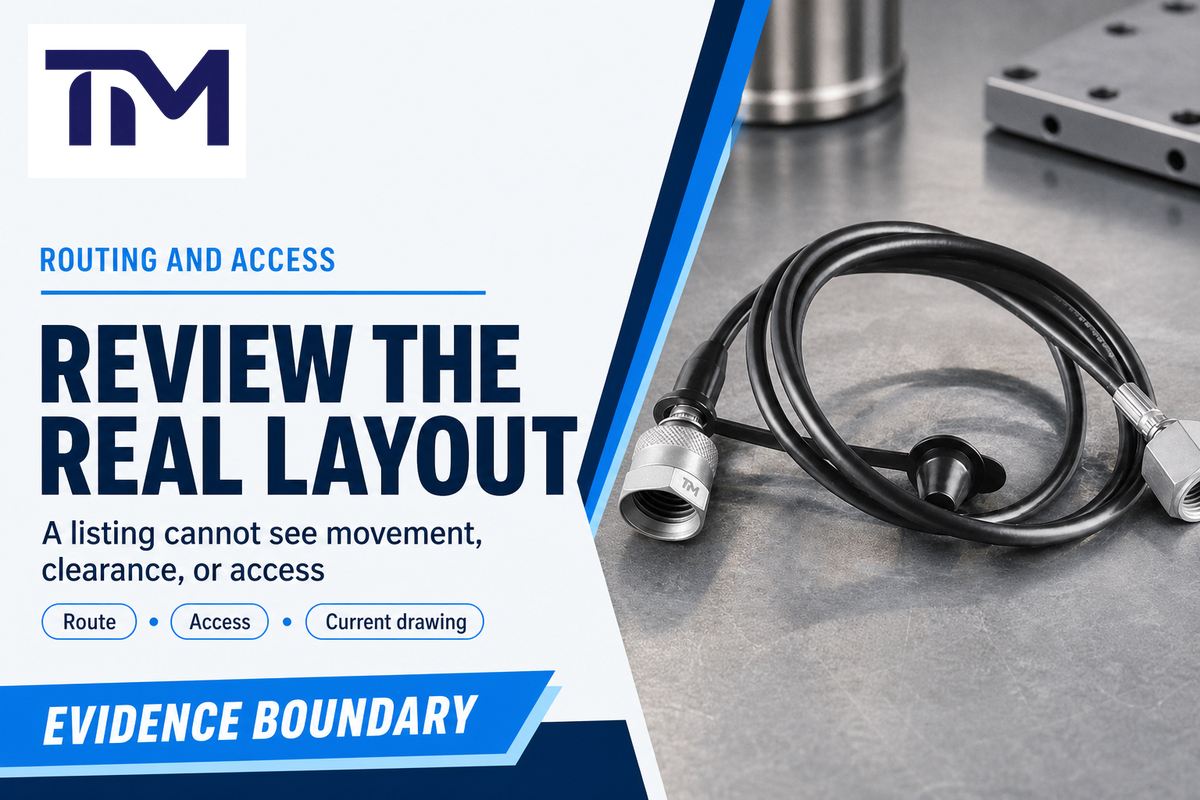
Product listings can identify a family, but they cannot see the machine layout. The route may include moving components, guarding, abrasion exposure, limited access, storage constraints, or a location where the hose is pulled, twisted, or bent only after the machine moves.
HSE guidance on pressure-system testing identifies wrong hose length, bend radius, stretch, and twist as factors that can contribute to failure. Use that guidance as a reason to review the real layout and the relevant current documents, not as a source for a generic DN4 bend-radius number. Read HSE GS4 pressure-system testing guidance.
| Layout question | Evidence to request |
|---|---|
| Will the route move, pull, or twist during machine operation? | Machine layout and current hose-routing requirements |
| Can the connection be reached without creating a new exposure? | Approved access and site procedure |
| Does the measurement need to reproduce changing pressure? | Instrument record and approved measurement method |
| Is there a question about length or clearance? | Current assembly drawing and the actual route dimensions |
The correct conclusion may be that a reviewer needs more information. That is a useful outcome, because it avoids turning an incomplete listing into an unsupported decision.
Access deserves the same attention as compatibility. Even a configuration that is technically described has not completed practical review if it cannot be reached, observed, or handled under the authorised machine procedure.
The layout creates a risk because a route that looks acceptable in a listing can become inaccessible, pulled, or twisted on the machine. Qualified reviewers should compare the drawing, the route, and the authorised procedure before confirming a measurement arrangement.
Safe Use Is a Boundary, Not a Product Promise
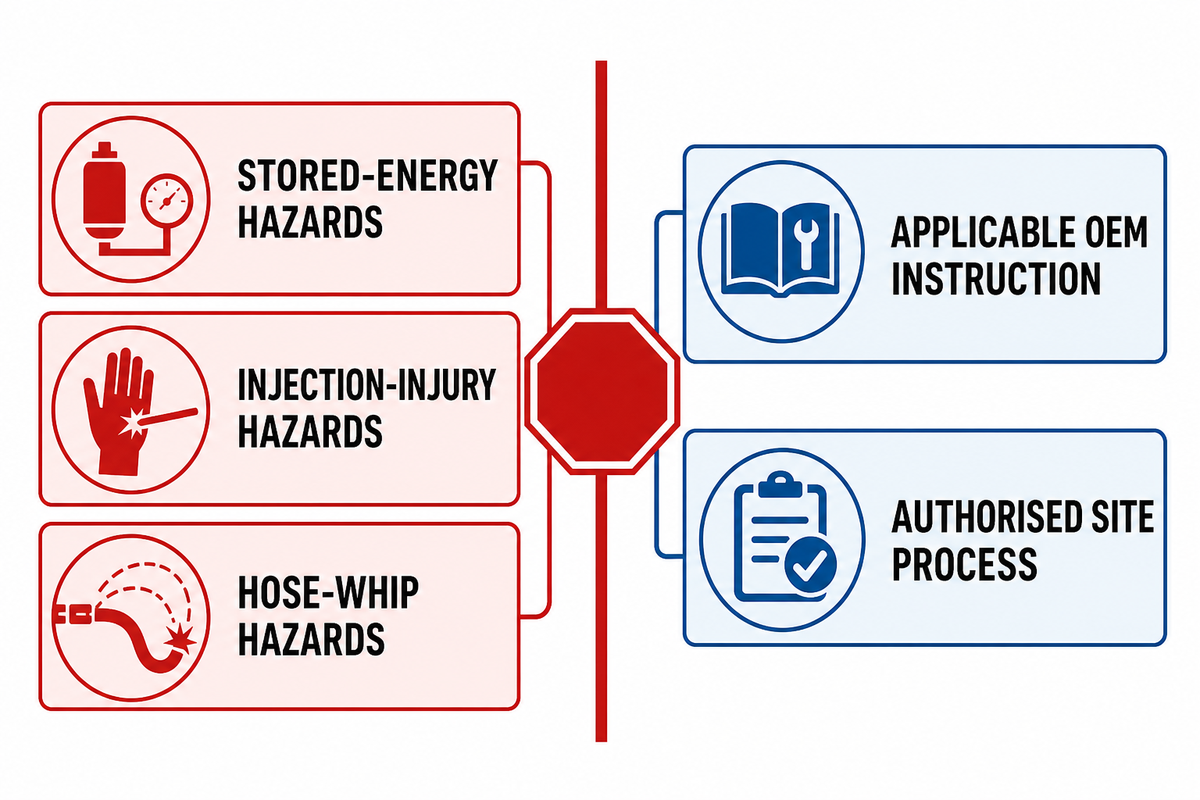
Hydraulic pressure can create stored-energy, injection-injury, and hose-whip hazards. This guide cannot supply the machine-specific operating, isolation, connection, inspection, or depressurisation procedure for an unfamiliar system.
Use the applicable OEM instruction and authorised site process. HSE warns that high-pressure fluid can cause serious injury and advises immediate professional assessment for suspected hydraulic injection injury. Read the HSE hydraulic-injection safety guidance.
Safety boundary: If the approved procedure, component identity, connection state, or site authorisation is unclear, stop the configuration conversation there and resolve the missing evidence. This guide does not provide a substitute operating sequence or medical-treatment advice.
The same boundary applies when a request is rushed. Delivery urgency, an old part number, or the availability of a similar-looking hose does not convert missing machine records into evidence. Qualified review starts with what can be verified, not with what appears convenient.
The safety risk remains even when the request appears routine, because a component description cannot prove the live machine state. Qualified reviewers must resolve the documented procedure and connection identity before the task moves beyond evidence collection.
What to Ask a Supplier Before Ordering a DN4 Assembly
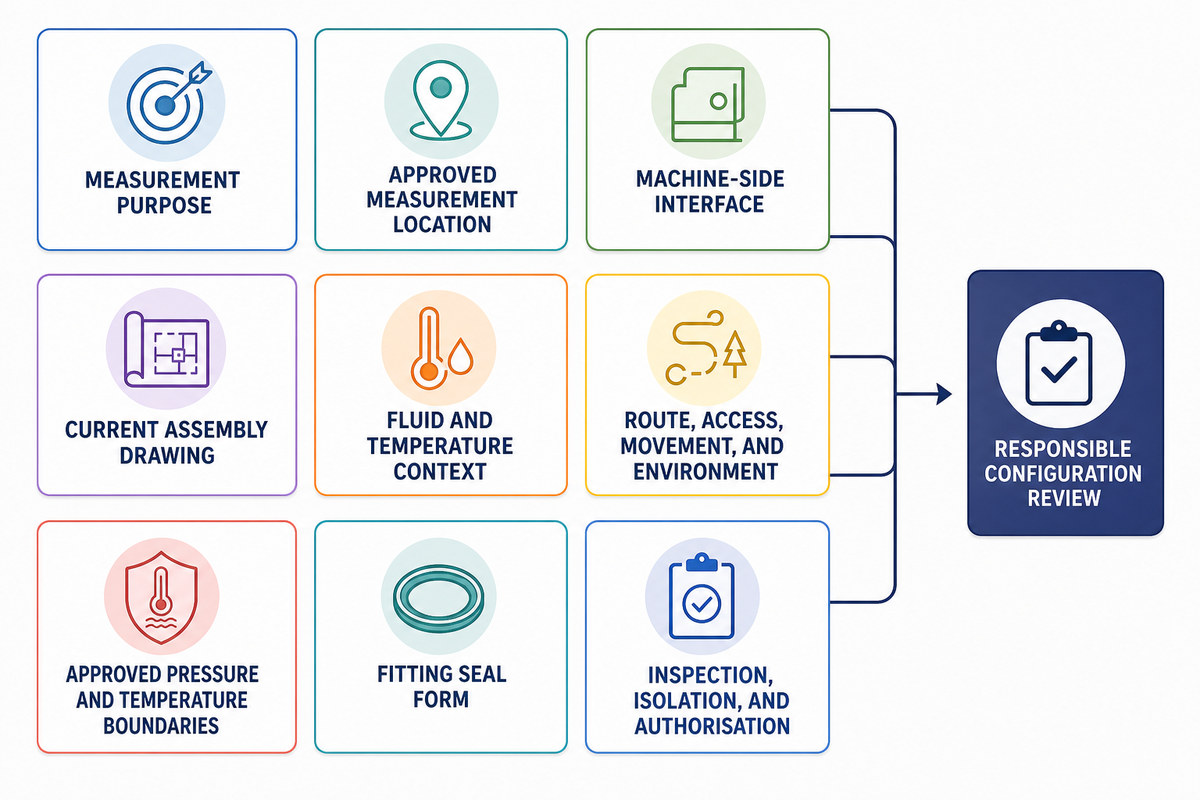
A supplier can respond more effectively when the request identifies the origin of each fact for the exact intended assembly. The table below separates documents that come from the equipment maker, the component supplier, the instrument provider, and the buyer’s actual layout.
| Request item | Document owner or evidence origin | Why it matters |
|---|---|---|
| Measurement purpose and any response requirement | Buyer and instrument record | Separates static access from dynamic-measurement questions |
| Approved measurement location and procedure | OEM or authorised site process | Prevents a catalogue page from replacing a machine instruction |
| Machine-side interface and connection identity | OEM drawing or verified machine record | Defines what must actually mate at the machine |
| Current hose-and-end assembly drawing | Supplier record for the exact assembly | Keeps values tied to the proper configuration |
| Fluid and temperature context | OEM and current component record | Avoids material assumptions |
| Route, access, movement, and environment | Buyer’s layout and site review | Shows what a product listing cannot observe |
| Approved pressure and temperature boundaries | Current manufacturer document for the exact component or assembly | Keeps limits conditional on the stated configuration |
| Fitting seal form and connection procedure | Exact component document and applicable OEM instruction | Avoids inference from a thread or nominal size alone |
| Inspection, isolation, and authorisation requirements | OEM instruction and authorised site process | Keeps operational control with the responsible parties |
Do not ask a supplier to make an unsupported promise from a single nominal label. Ask for a current review against this evidence set, and preserve the documents that answer the final configuration question.
For the diagnostic-coupling source boundary used in this guide, see SAE J1502 before treating a nominal label as a complete assembly statement.
This evidence-first request is also easier to audit later. It shows whether an answer originated with the OEM, the instrument provider, the supplier’s current assembly record, or the site layout, instead of presenting all information as though it came from one catalogue entry.
The buyer’s risk is an unsupported quotation because a supplier cannot verify what the request does not identify. Qualified reviewers can use the current drawing, the specified connection chain, and the measurement purpose to distinguish a documented assembly question from a generic DN4 enquiry.
The Page-to-Guide Handoff: When to Move From Learning to Configuration
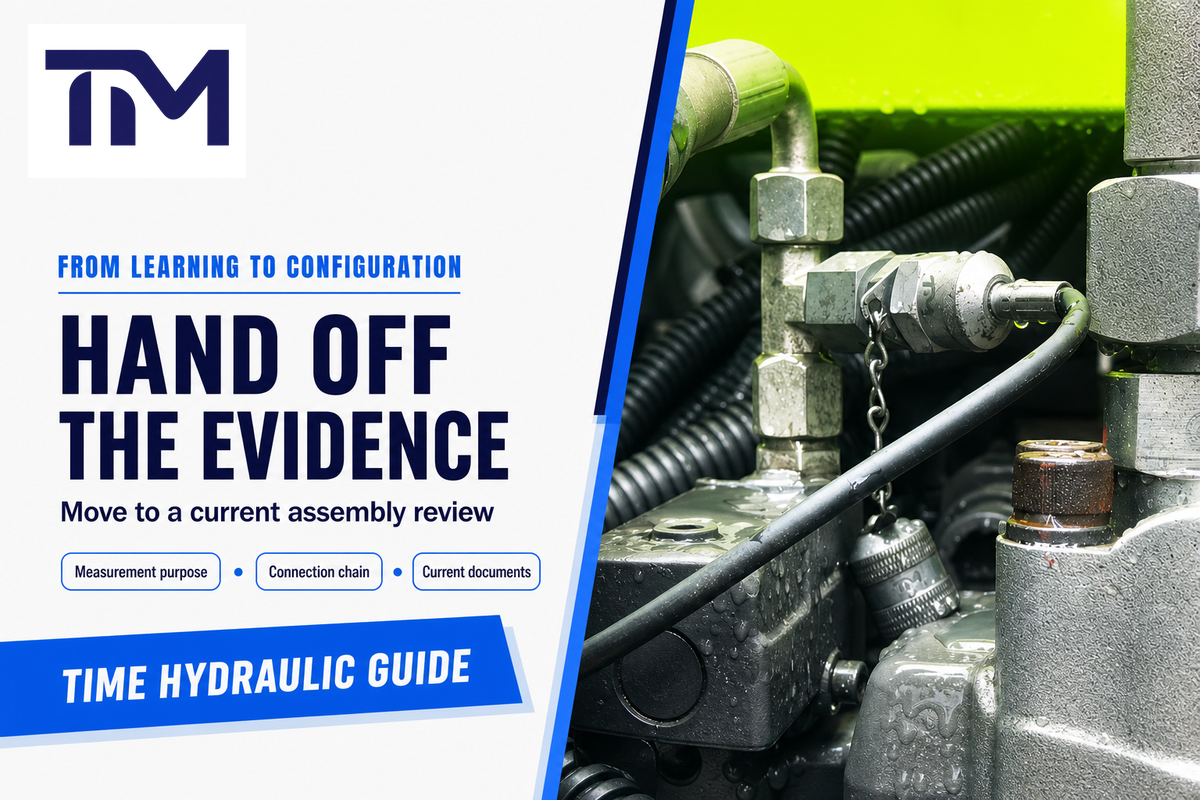
Use this guide until you can state the measurement purpose, identify the controlling OEM instruction, map the complete connection chain, describe the fluid and route, and name the missing evidence. At that point, the problem is no longer “What does DN4 mean?”; it is “Can this exact assembly be reviewed for this exact application?” This is the editorial dividing line that prevents an information guide from competing with a configuration page for the same immediate task.
This handoff prevents a configuration mismatch because it moves the reader from a broad guide to the documents for one specified assembly. Qualified reviewers can then examine the drawing and evidence package without treating the article as a substitute specification.
For that configuration-stage discussion, take the brief to the DN4 hydraulic test hose solution page. That handoff keeps educational guidance distinct from current product and assembly review.
Frequently Asked Questions
What does DN4 mean for a hydraulic test hose?
DN4 is a nominal-bore designation used to begin identifying a small hydraulic test-hose size. It does not establish the end connections, hose length, construction, approved pressure range, fluid compatibility, temperature range, routing condition, or instrument response required by a particular job. Treat it as a starting identifier, then collect the current drawing and the documents relevant to the measurement task. A useful record also says who owns each missing answer, so the final reviewer can distinguish an OEM fact from a supplier document or a site-layout observation.
For the diagnostic-coupling source boundary used in this guide, see SAE J1502.
Is DN4 enough information to select a hydraulic test hose?
No. A review also needs the measurement purpose, the complete connection chain, the machine-side interface, the fluid and temperature context, the actual route, and the relevant equipment instruction. If the task involves changing or pulsating pressure, the approved instrument documentation may add another requirement. A guide can organise these questions, but it cannot replace the evidence for a specific assembly. The correct response to a missing field is to request that field, not to select the nearest available catalogue value. This is especially important when the final decision will be used by a different person from the one who first gathered the information.
When should a buyer compare DN4 with DN2?
Compare DN4 and DN2 only when current documents identify the relevant constructions and the application makes the comparison necessary. Do not convert a DN2 catalogue figure into a DN4 requirement. Keep each pressure, burst, temperature, bend, or response statement tied to its original manufacturer data sheet, exact assembly, and stated conditions, then ask for a review of the real configuration. If the available documents do not name both constructions clearly, the comparison should remain an open question rather than a calculated conclusion.
What documents should be checked before connecting a gauge or sensor?
Start with the equipment maker’s instruction and the approved measurement procedure. Then gather current evidence for the machine interface, coupling or fitting, hose assembly, and instrument, together with the fluid and temperature context. The route, operating position, and any transient-measurement requirement also matter. Missing information should lead to a configuration review rather than an assumption based on a nominal hose size. A document name or a clear photograph can be useful supporting material, but it should not be presented as an approval when its version, identity, or applicability is unknown.
Can a generic DN4 rating replace the machine manual?
No. A generic rating cannot establish the correct machine-side procedure, connection state, complete component chain, or safe operating arrangement. It also cannot prove that a measurement arrangement is suitable for every changing-pressure task. Use the machine documentation and current component evidence for the actual job. This guide prepares better questions; it does not replace the equipment maker or an authorised technical review. A safe review also distinguishes a product limit, a component-combination limit, a machine instruction, and a site rule, because they may originate from different documents and none should be silently substituted for another.
For a practical review, place the relevant documents beside each other instead of relying on a summary copied into an email or purchase note. The equipment instruction should identify the approved machine context; the current assembly record should identify the intended components and their permitted combination; the instrument documentation should identify its own use conditions; and the site process should identify who may perform or authorise the work.
If these records conflict, are incomplete, or cannot be tied to the actual machine, do not use this article to decide which record wins. Preserve the disagreement, ask the responsible owner for clarification, and continue only through the applicable documented process.
References & Sources
- SAE J1502_202205: Diagnostic hydraulic couplings
- UK Health and Safety Executive: Hydraulic injection injury guidance
- UK Health and Safety Executive: HSE GS4 pressure-system testing guidance
- ISO 11237:2025 hydraulic hose and assembly specification
- Jentzsch et al. (2024): Dynamic response of a pressure transducer for measurements in water
PAGE & COMPANY CONTEXT
This page is intended to help industrial buyers understand a practical hydraulic diagnostic path: test point, microbore hose and pressure-gauge connection.
For the site’s published company background, visit About. For inquiry details, visit Contact; information-handling details are available in the Privacy Policy.
TIME HYDRAULIC / IKIN
Hydraulic test-connection context for business inquiries
- Manufacturing context
- Changzhou Time Machinery Technology Co., Ltd., Changzhou, Jiangsu, China.
- Trade and export context
- Shanghai Ikin Hydraulic Co., Ltd.
- Product focus
- Hydraulic test points, DN2/DN3/DN4 microbore hose assemblies and pressure gauge connectors.
Since 2017
The public About page describes production activity since 2017.
Site-stated scale
The public About page states a 5,000 m2 plant and supply to 40+ countries.
Site-stated controls
The public About page describes ISO 9001, SGS, 100% inspection and a three-year warranty.