
Get in touch with TIME Company

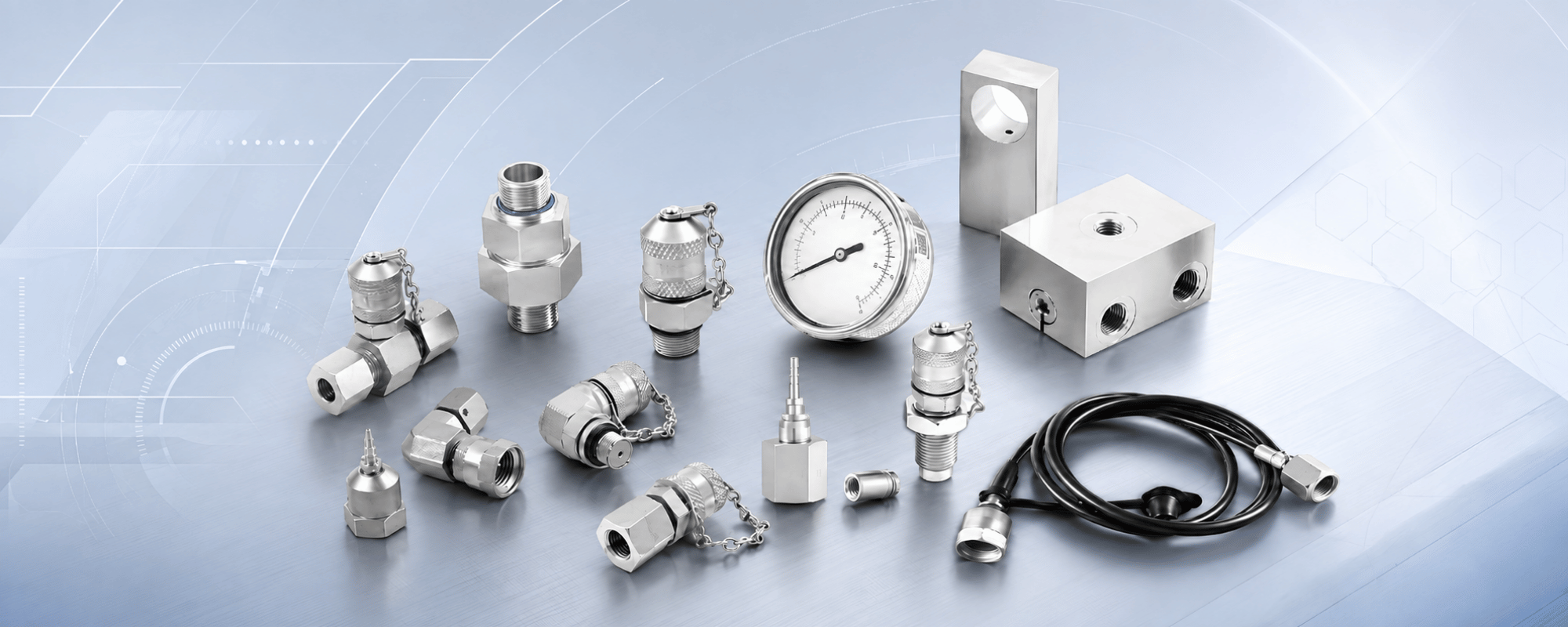
Hydraulic Test Fittings Supplier — Test Points, Test Hoses and Gauge Connectors
Send the part number you use now, or a drawing, and an engineer comes back with a matching connection.
Your enquiry, drawings and part numbers are handled as confidential.
Test points and couplings
M16 × 2 diagnostic test points, bulkhead, tube-connection and stainless variants
Test hoses and end fittings
DN2, DN3 and DN4 microbore hoses with matched end fittings
Gauge connectors and adapters
Straight, angled and bulkhead gauge connections, DKO adapters
Applications
Excavator, crane, valve-block, mining and fluid-sampling test connections
SYSTEM PORTFOLIO
Four Hydraulic Pressure Testing Routes
A hydraulic test connection is rarely one part. It is a port-side fitting, a microbore hose and a gauge-side connection that all have to agree with each other. Our four product lines are organised the way that decision is actually made.
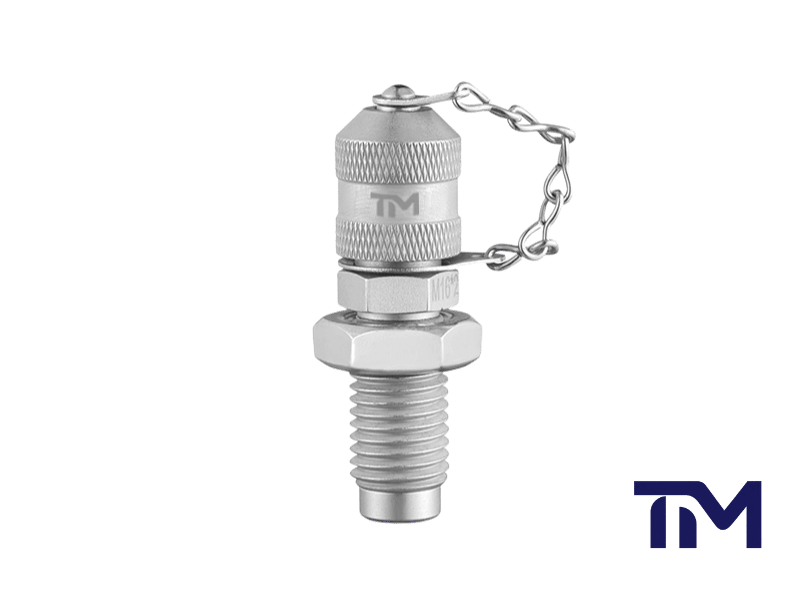
Hydraulic Test Points & Couplings
Connection
M16 × 2 diagnostic end to ISO 15171-2
Variants
Bulkhead, tube-connection, stainless steel, test-point adapters and test tees
Sealing
Cone-seal, zero-leakage design with a metal protective cap
Marking
Customized logo accepted
Bulk lead time
10–30 working days
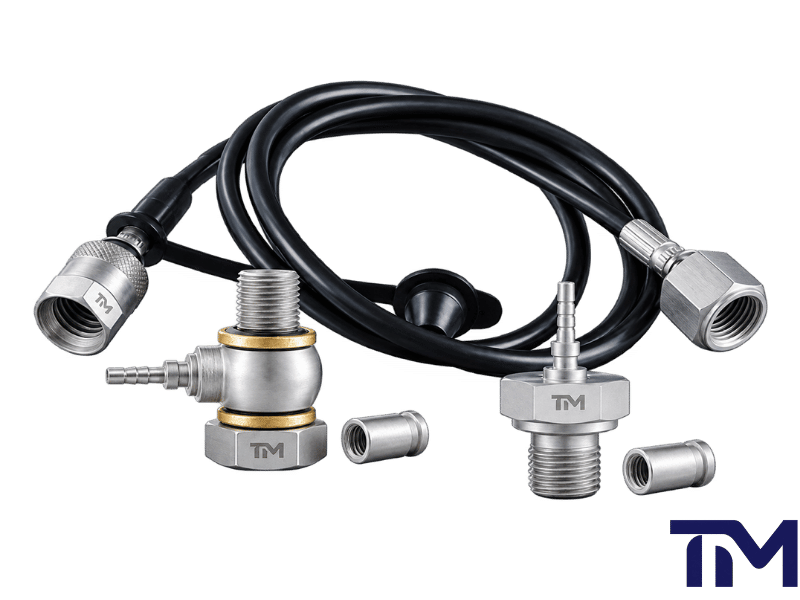
Hydraulic Test Hoses & Fittings
Bores
DN2, DN3 and DN4 microbore test hose
Ends
Test-hose end fittings, banjo and DKO terminations
Assembly
Cut to the length you specify, both ends fitted and tested
Custom work
Custom test-hose assemblies against your drawing
Bulk lead time
10–30 working days
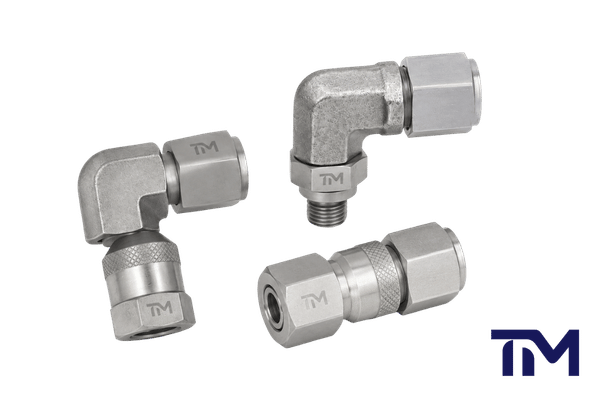
Pressure Gauge Connectors & Adapters
Function
Carry a gauge from the test point to a readable position
Geometry
Straight, angled and bulkhead gauge connections
Interfaces
Straight DKO pressure gauge adapters and thread-seal variants
Selection driver
Gauge plane clearance and the port orientation you have to live with
Bulk lead time
10–30 working days
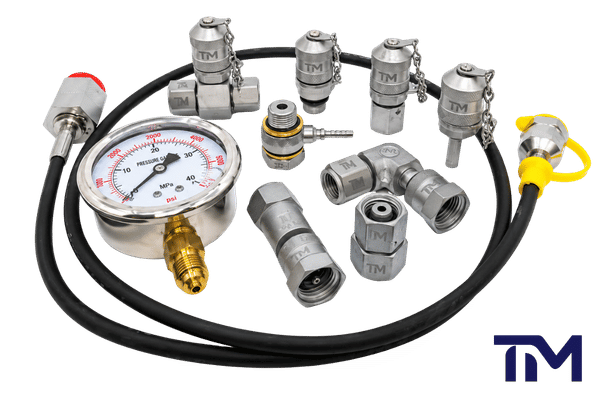
Hydraulic Testing Applications
Machine types
Excavators, cranes, mining and rock-drilling equipment
Circuit points
Valve blocks, pump outlets, bulkhead crossings
Beyond pressure
Bleeding, filling and fluid-sampling access
What we supply
The complete connection, not a single loose fitting
Bulk lead time
10–30 working days
Where These Connections End Up
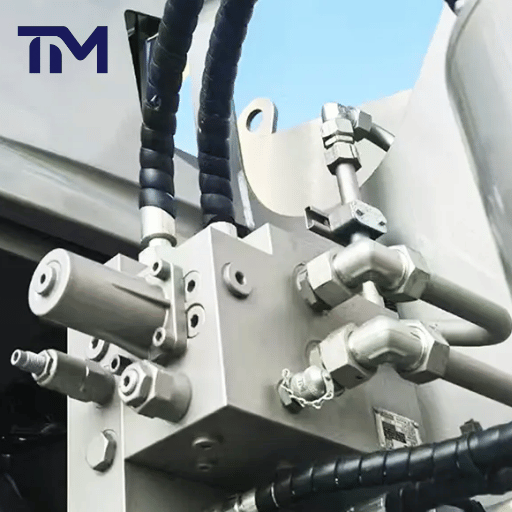
- Excavator work-equipment, swing and travel circuits
- Mobile and crawler crane hydraulic systems
- Mining and rock-drilling equipment
- Valve blocks and hydraulic power units
- Test rigs and hydraulic service benches
- Fluid-sampling and diagnostic access points
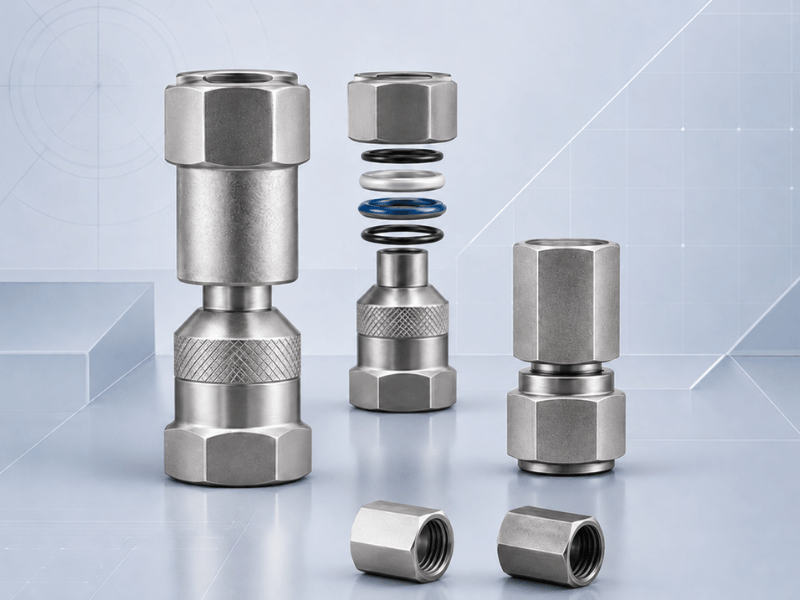
Materials, Seals and Body Options
Body material and seal material are two separate decisions, and they’re driven by different things. The body answers the corrosion question. The seal answers the fluid and temperature question.
01
Carbon steel bodies
The default body material for hydraulic test points and gauge connectors on mobile equipment. Corrosion protection comes from the plating rather than from the base metal.
02
Stainless steel bodies
Chosen when the exposure environment attacks a plated carbon steel body faster than the machine wears out.
- Marine and coastal installations
- Washdown and food-adjacent environments
- Chemically aggressive service
03
Seal materials
We supply the seal families used across diagnostic couplings, including nitrile, fluorocarbon and ethylene-propylene elastomers. Which one belongs in your connection is set by the fluid, the operating conditions and how often the joint is cycled, not by the material name alone. ISO 15171-2 designs the coupling around mineral oils, and it states that any other fluid is a matter of agreement between supplier and purchaser, so tell us the fluid before the seal is chosen.
- Fluid the circuit actually carries
- Operating temperature range at the joint
- How often the connection is made and broken
- Bench performance and service performance are different questions, so we ask for the duty before we recommend a seal.
04
Another material or grade
Give us the grade with your drawing and we confirm availability and price in the quotation. We quote from drawings, samples or written specifications.
Request a QuoteCommercial Terms
Quotation, Lead Time and Order Terms
Price follows the connection family, the body and seal materials, the plating designation, hose length and quantity. There’s no fixed price list for a configured test connection, and your figure comes back in a written quotation.
What Moves Your Price
Driver
Effect on cost
How to reduce it
Body material
A stainless body costs more than a plated carbon steel body
Use stainless only where the exposure environment justifies it
Plating designation
Higher corrosion classes cost more per piece
Specify the designation the environment needs, not the highest one available
Hose length and bore
Longer assemblies and larger bores raise material cost per unit
Measure the routed length rather than ordering a round number
Number of variants
Many one-off configurations cost more than fewer repeated ones
Standardise on one or two interface families across the fleet
Order quantity
Unit cost falls as the batch grows
Consolidate scheduled replacements into one release
How Your Quotation Is Produced
Send a part number, a drawing, a sample or a written specification, and an engineer returns a quotation within one business day. We quote from drawings, samples or written specifications, and we say so plainly rather than asking you to fill a configurator we don’t have.
Order Terms
Term
What we work to
Quotation turnaround
Within one business day, reviewed by an engineer
Bulk lead time
10–30 working days
Trial orders
From 100 pieces, and we mark them with your own logo at no extra cost
Samples
Charged by item and usually dispatched within 3 days
Payment
Telegraphic transfer: 30% deposit with the order and the 70% balance before delivery
Trade terms
Incoterms 2020 — EXW, FOB, CIF and CFR
Loading ports
Shanghai or Ningbo
FOB shipments load at Shanghai or Ningbo. The named place for EXW and the destination port for CIF and CFR are set in your quotation, so the term on the order is complete rather than half-written.
Quality Assurance
Inspection, Certificates and Warranty
A test point sits on a live circuit and gets handled by people who are troubleshooting under time pressure. That is the reason every fitting is checked before it leaves, rather than a sample from each batch.
How Every Order Is Checked
- Incoming raw material is released against the specification the order was quoted on.
- Machining and finishing run to the drawing, with the plating designation carried through to the shop paperwork.
- Semi-finished parts are checked before assembly rather than after.
- Assembly, pressure testing and marking are done in sequence, and the results stay with the batch.
- 100% inspection before shipment, every piece, not a sample.
Certificates
We send copies of our SGS and ISO certification documents with your quotation. Read the issuing body, the scope and the validity dates from the certificates themselves, not from this page.
Ask for certificate copiesWarranty
Every fitting we ship carries a 3-year quality warranty. Our cone-seal, zero-leakage design and the metal protective cap are what that warranty is written against.
Visiting the Factory
You’re welcome to visit the factory in Changzhou, Jiangsu Province, which is one hour from Shanghai by high-speed rail. Buyers who audit before they order tend to ask to see the pressure-testing station, and it’s the part of the line we most want to show.
Production Workflow
From Your Part Number to a Quoted Assembly
STEP.01
Send Reference
Send what you already have — a part number, a photo of the fitting, a drawing or a sample.
STEP.02
Interface Check
We read the interface back to you — connection family, stud end, seal form and gauge side, in writing.
STEP.03
Written Quotation
Written quotation — configuration, quantity, lead time and terms on one document.
STEP.04
Production
Manufacture and inspection — machining, assembly, pressure testing and marking against the quoted configuration.
STEP.05
Quality Guarantee
We own the mismatch — if a fitting we supplied does not mate as we confirmed it would, we replace it.
STEP.06
Dispatch
Packing and dispatch — from Shanghai or Ningbo on the term agreed in the quotation.
The Test Connection Definition Register
Six inputs decide a test connection. When all six arrive together, the quotation is a specification rather than a guess, and nothing has to be re-asked.
Input
What to send
Why it changes the answer
Machine-side port thread
Thread form and size, or the port standard on the drawing
Decides which stud-end family the test point needs
Connection family
Whether the machine uses an M16 × 2 screw-on or a flat-face push-on
Decides whether a reading can be taken with the circuit live
Pressure class
System working pressure, and whether it is connected under pressure
Separates the connect-under-pressure case from the running case
Fluid and duty
Fluid type plus how often the joint is connected and disconnected
Drives seal selection more than the temperature figure alone does
Hose bore and routed length
DN2, DN3 or DN4 and the length as routed, not as guessed
Bore governs response and length governs whether it reaches
Gauge-side connection
The thread on the instrument you are actually going to fit — BSPP, NPT, JIC 37°, ORFS, a metric form, or a swivel version of any of them
Prevents the adapter stack that gets built at the machine
Industries and Machine Types We Supply
Our fittings are supplied to SANY, XCMG, Parker, Hawe, GE, Rexroth and Caterpillar. We supply test points and test hoses to Europe, North America and Southeast Asia. ISO 4413 covers general rules and safety requirements for hydraulic fluid power systems and their components, which is the frame a diagnostic connection has to sit inside whatever the machine is.
We've manufactured hydraulic test fittings since our own line was developed from 2014, in a company founded in 2009, and we've produced in Changzhou since 2017. Production runs in a 5,000 m² facility with new workshops under construction.
Working on a fleet rather than a single machine? Send one part number and we will map the rest of the family against it.
Send a part number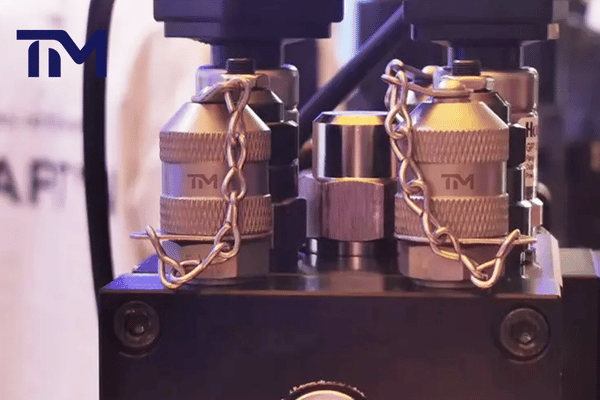
Earthmoving
Excavator work-equipment, swing and travel circuits, where readings are taken with the machine warm and running.
Lifting
Mobile and crawler cranes, where the test point is often the only safe access to a circuit under load.
Mining and rock drilling
High-vibration machinery where the protective cap and its retention matter as much as the pressure class. See mining and rock-drill test connections for the circuit-by-circuit version.
Industrial hydraulics
Valve blocks, power units and presses, where a fixed set of test points replaces a fixed set of gauges.
Test rigs and service benches
Hose and component test benches that need repeatable, tool-free connections between runs.
Fluid sampling and diagnostics
Sampling and bleed access, where the test point is the entry to the circuit rather than the whole sampling path.
Application Limits
Where a Test Point Is the Wrong Answer
A permanently fitted diagnostic connection is the right call more often than not. In the three situations below it is not, and each one is a trade-off rather than a fault in the part. Each is also a safety question and not only a cost one, since ISO 4413 scopes hydraulic fluid power systems together with their components rather than treating a connection as an accessory to them.
Situation
Why it works against you
What to do instead
You need the reading from a return or tank line
The line where you want the reading is not always the line marked T — that port is the suction or return side, so a gauge fitted there answers a different question from the one being asked
Identify the pressure branch on the circuit diagram first, then fit the test point there
You need a fluid sample, not a pressure reading
The pressure capability of the test point says nothing about whether the downstream sampling path is suitable
Specify the sampling path as its own chain — reducer, hose, adapter and container method
The port thread does not match and an adapter stack is being considered
Every added joint is another leak path, and the stack costs more than the correct fitting
Do not try to force a mismatched thread into the port. Send the port thread and the gauge thread together and have one fitting made to bridge them
Engineering Resources
Hydraulic Test Configuration Tools
Test Point Interface Identifier
Work from what's already on the machine to identify the exact connection family and stud end you need.
Open IdentifierPressure Unit and Class Converter
Convert between MPa, bar and psi while keeping working and connect-under-pressure limits strictly separated.
Launch ConverterSix-Input RFQ Brief Builder
Assemble a complete hydraulic test connection brief to ensure the quoted part mates right the first time.
Build RFQ Brief
Knowledge Base
Frequently Asked Questions
What is a hydraulic test fitting?
It is a permanently installed connection point that lets a gauge or a diagnostic hose be attached to a hydraulic circuit at a chosen location. The M16 × 2 diagnostic version to ISO 15171-2 can be connected by hand while the system is under pressure, up to 40 MPa (400 bar).
What thread types are available for hydraulic test fittings?
The diagnostic end is M16 × 2. The machine-side stud end is one of four families named in ISO 15171-2: ISO 6149-2 M14 × 1.5, ISO 9974-2 M14 × 1.5, ISO 1179-2 G 1/4 and ISO 11926-2 7/16-20 UNF. Which one you need is set by the port already on the machine.
What are the different types of hydraulic test ports?
The practical split is between the screw-on M16 × 2 family under ISO 15171-2 and the flat-face push-on family under ISO 15171-1. The second standard is titled "Coupling not for connection under pressure", which is the whole difference in one line.
What are hydraulic test fittings made from?
Bodies are carbon steel with a plated finish, or stainless steel where the environment justifies it. Seals are supplied in the elastomer families used across diagnostic couplings, selected against your fluid, operating conditions and duty cycle rather than by material name.
What is the maximum pressure a hydraulic test fitting withstands?
Two different numbers apply. ISO 15171-2 sets 40 MPa (400 bar) as the limit for connecting under pressure, and permits couplings built to that part to run at a maximum working pressure of up to 63 MPa (630 bar) depending on materials, design, working conditions and application. The rating of a specific model is confirmed on the drawing.
Can your fittings replace Minimess, STAUFF or Parker parts?
Give us the part number you use now and we quote a matching connection. Where the machine uses the M16 × 2 family to ISO 15171-2, standard-conforming parts from different makers share the same interface, which is what makes a like-for-like replacement possible in the first place.
How do I stop buying test fittings that do not fit?
Thread confusion is the most common reason a test fitting comes back, and it usually starts with ordering on thread size alone and discovering the machine belongs to the other standard family. Send the six inputs listed above and the mismatch is caught on paper instead of at the machine.
Can I get a free sample of hydraulic test fittings?
Sample is free and is usually dispatched within 3 days. Tell us the configuration you want to evaluate and the sample charge appears on the quotation before you commit.
What is your lead time?
Bulk orders ship in 10–30 working days. Quotations are returned within one business day, so the clock on a decision starts the day after you send the drawing.
What are your payment and trade terms?
Telegraphic transfer with a 30% deposit against the order and the 70% balance before delivery. We work on Incoterms 2020 terms, EXW, FOB, CIF and CFR, and FOB shipments load at Shanghai or Ningbo.
Do you have certifications for your products?
We send copies of our SGS and ISO certification documents with your quotation. The issuing body, the scope and the validity dates are printed on the certificates, and reading them there is more useful than a badge on a web page.
Can you mark the fittings with our own brand?
Yes. LOGO marking can be customized, and trial orders start from 100 pieces so a branded batch can be evaluated before a full release.