Get in touch with TIME Company

Hydraulic Test Hoses & Fittings: A Diagnostic Connection Guide

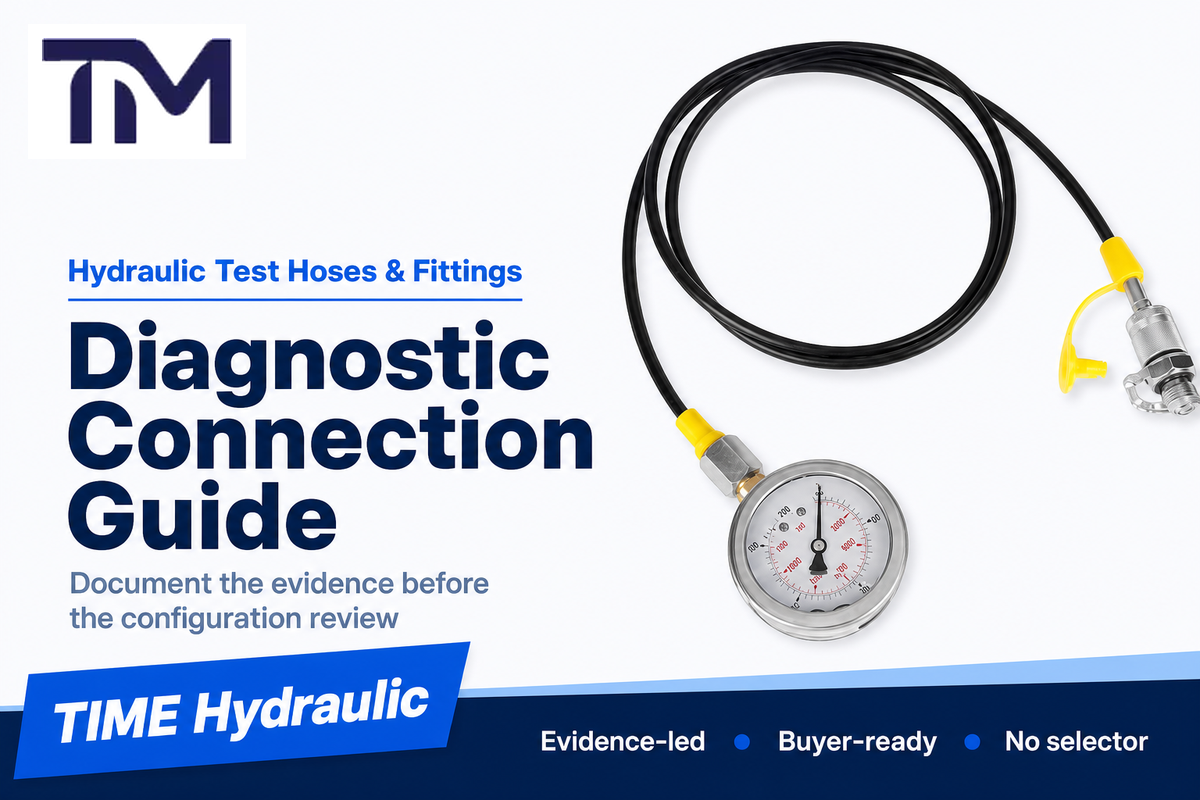
Educational guide for engineers, maintenance leads, and industrial buyers.
Hydraulic Test Hoses & Fittings are a test-connection system, not just a short hose plus two ends. They create the path by which a machine condition is observed, recorded, and handed to the people responsible for a technical decision. That makes the useful question less “Which fitting looks close?” and more “What evidence says this complete measurement arrangement is appropriate for the job?”
This guide is deliberately not a catalogue, thread-identification lesson, pressure calculator, or test procedure. Those activities need exact equipment information and the applicable approved process. Its purpose is to help a reader prepare a documented handoff before a configuration review. Once the needed records are available, the existing Hydraulic Test Hoses & Fittings solution page is the commercial destination for product-family routing and a quotation request.
What Hydraulic Test Hoses and Fittings Do in a Test Connection
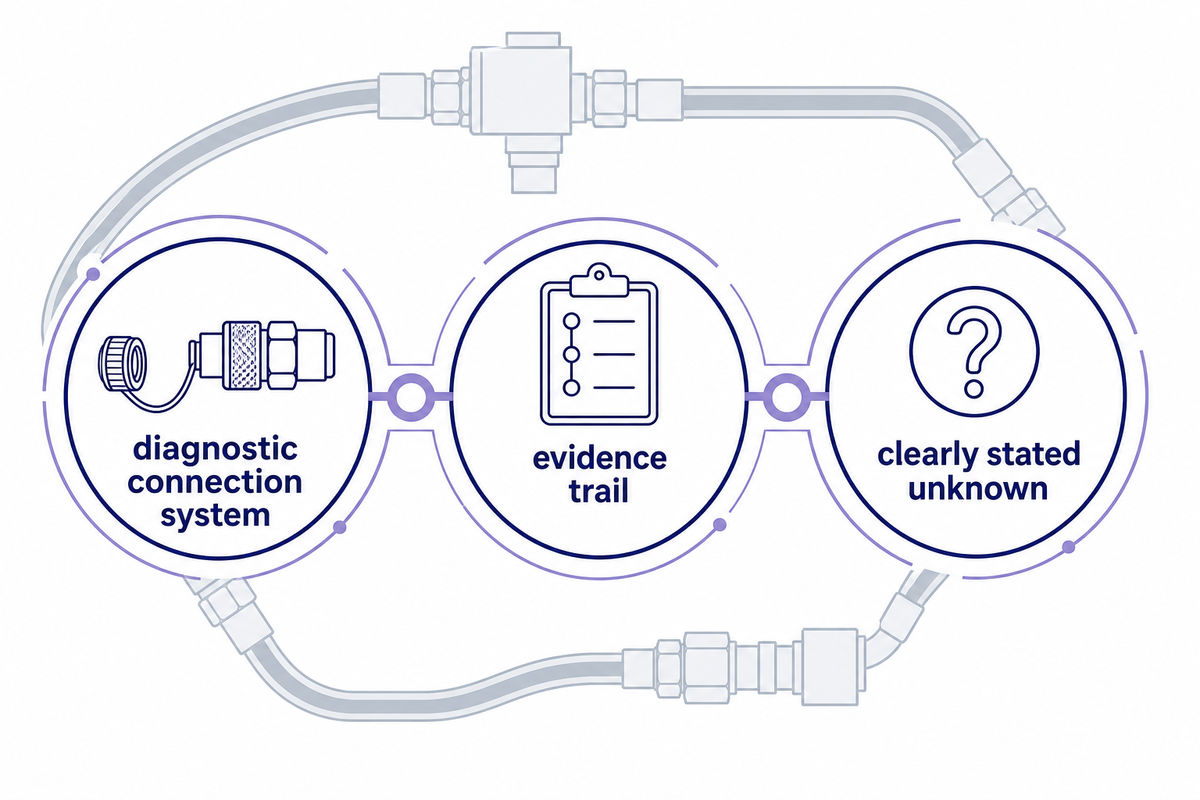
In a test-connection setting, an access point, any adapter or coupling, a test hose, and an approved instrument form one measurement path. Each item has a role, but none should be judged in isolation. For example, a pressure value on one component does not document the interfaces, service conditions, complete assembly, instrument use, or procedure that surround it.
That whole-path view is consistent with the way authoritative documents frame hose assemblies. ISO 18752 describes an assembly maximum working-pressure conclusion in terms of the lowest maximum working pressure of its components, rather than a headline value from one part alone. ISO 18752:2025 is not a selection tool for a specific machine, but it is a useful reminder to ask for assembly-level evidence. Likewise, the scope of SAE J1273 spans selection, routing, fabrication, installation, replacement, maintenance, and storage. A test connection belongs in that lifecycle context.
The reason to retain an ISO or SAE reference in the handoff is not to select a part from a blog. It shows which documented scope needs to be checked against the machine record before an owner approves a configuration or a measurement activity.
Start with the measurement question. Is the team trying to investigate an observed machine condition, verify a documented condition, or complete an approved maintenance task? That answer determines which machine documentation, instrument information, and responsible owner should be involved. Such an assembly may enable access to a measurement point; it does not by itself make a result reliable or authorize a live connection.
That question-first approach also prevents a common procurement mismatch. In procurement, a purchaser may know that a machine needs a test connection but not know whether the request concerns a permanent monitoring point, a temporary measurement task, a replacement assembly, or an investigation of a condition. Those are not interchangeable requests. They can require different records, different internal approvals, and different supplier questions. Naming the task early is more useful than trying to solve the uncertainty by adding generic technical detail to an enquiry.
Think of the connection path as an evidence trail. Machine documentation tells the team what it is trying to access. Connection records identify the proposed path. An assembly record explains what is being supplied or inspected. Instrument and procedure records explain how the result will be used. When any link is missing, the productive outcome is a clearly stated unknown, not a forced conclusion.
For a supplier that specializes exclusively in hydraulic test points and hoses, the useful first response is still a request for the machine-side record, the connection path, and the purpose of the measurement. TIME Hydraulic’s supplied company background describes that narrow manufacturing focus; it does not turn a general supplier description into approval for an unknown machine or a substitute for the responsible technical review.
Search labels such as “hydraulic test hoses & fittings PDF,” “hydraulic test hoses & fittings catalog,” “hydraulic test port types,” “hydraulic test tee fittings,” “hydraulic test port fittings,” and “hydraulic test kit” can help a reader find a reference or product route. None of those labels identifies the exact asset, mating path, condition, or controlled procedure needed for a measurement decision.
“Where the record stops, the assumption must stop.”
The 5-Question Test Connection Passport
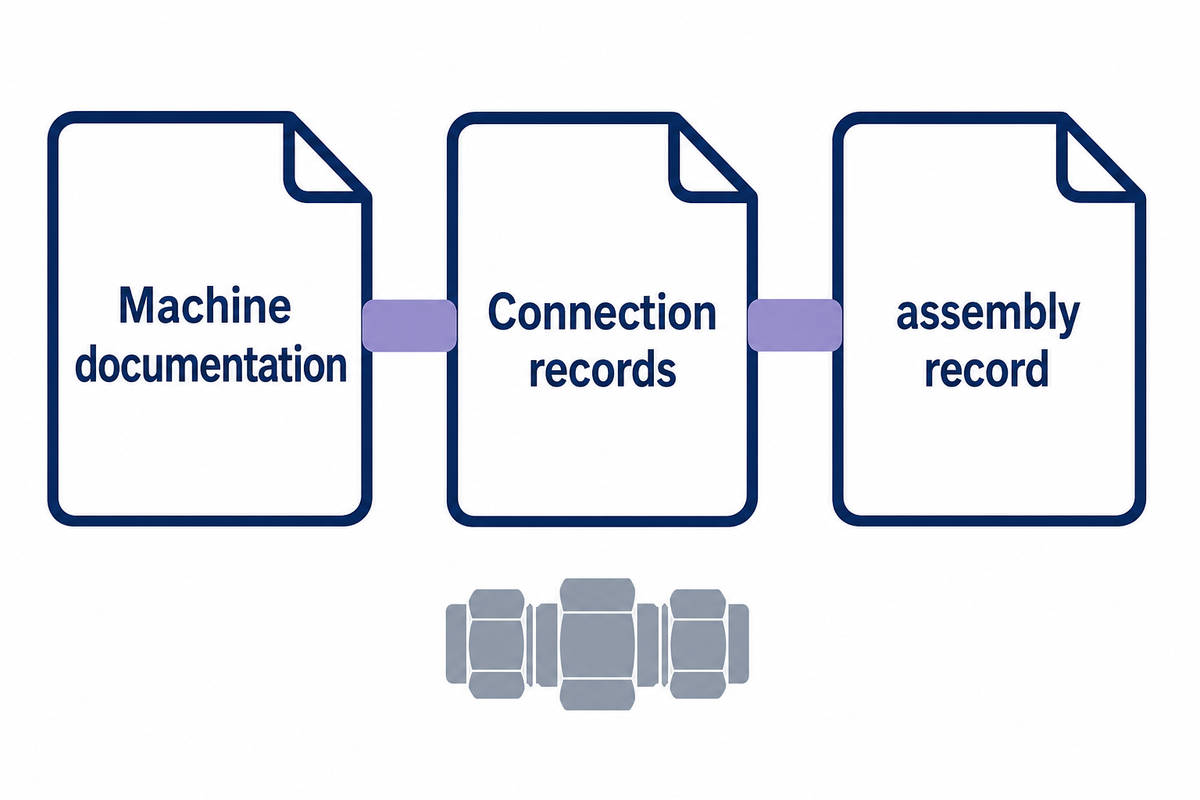
The 5-Question Test Connection Passport is an original planning aid for this guide. It is not an ISO, SAE, OEM, or supplier standard. Its value is modest but practical: it makes missing information visible before a buyer, technician, or supplier is asked to bridge the gap with an assumption.
Use the nine evidence fields below to answer five practical questions: what asset and interface are involved, what path is proposed, what assembly and condition evidence exists, what measurement is intended, and who owns the procedure or escalation. It’s a handoff sheet, not a pass/fail checklist. A full sheet still doesn’t establish that a measurement is fit for purpose. NIST explains that metrological traceability is a property of a measurement result, supported by a documented calibration chain and uncertainty; it doesn’t automatically guarantee fitness for a particular use. See NIST’s metrological traceability guidance for that distinction.
| Evidence category | What to capture | If it is unknown | Next owner |
|---|---|---|---|
| 1. Asset identity | Equipment identifier, variant where documented, and the source document reference. | Do not infer an asset variant from a photo, family name, or remembered configuration. | Equipment owner or OEM records holder. |
| 2. Machine-side interface | Documented access location and the drawing or manual reference that identifies it. | Do not infer an interface from a visual resemblance or an unverified list. | Equipment owner or OEM records holder. |
| 3. Connector path | Each connection component’s documented identity and its relationship to the machine-side interface. | Keep the path open for technical review; do not substitute a visually similar part. | Qualified technical reviewer or supplier contact. |
| 4. Hose-assembly evidence | Assembly identity, relevant drawing or specification, condition record, and any stated service limitations. | Do not transfer an attribute from another length, end configuration, or application. | Assembly owner or documented supplier source. |
| 5. Condition observation | Observed condition, date, location, and any change against the documented baseline. | Describe the observation without treating it as an automatic conclusion or disposition. | Maintenance owner or qualified technical reviewer. |
| 6. Measurement purpose | The stated question the measurement is intended to support. | Do not assume that a reading is useful until its intended decision is defined. | Measurement owner or responsible engineer. |
| 7. Instrument evidence | Approved instrument information, the relevant calibration record, and the result-quality requirement where defined. | Record the uncertainty instead of assuming a calibrated instrument settles the whole question. | Measurement owner or responsible engineer. |
| 8. Fluid and cleanliness scope | Any documented fluid, cleanliness, or transfer-contamination requirement for the work. | Keep a missing requirement open; do not treat a pressure or connector record as evidence for it. | Equipment owner, procedure owner, or supplier source. |
| 9. Procedure and escalation owner | The approved procedure, work controls, and the named person who can resolve a conflict or missing record. | Stop the configuration handoff at the unknown; do not create a generic workaround. | Site authority, OEM, or designated competent person. |
| Decision record | Dated handoff note stating which fields are confirmed and which require technical review. | Do not label an unresolved request as approved simply because the table is populated. | Named technical decision owner. |
This table is intentionally evidence-led. It does not ask a buyer to calculate pressure, identify threads from an image, or choose a model. It asks the team to preserve provenance: the source of each statement, the version that applies, and the owner of the next decision. That distinction turns a vague request for “hydraulic test hoses and fittings” into a reviewable technical brief.
A Passport can be short. One maintenance lead may have an equipment reference, two photos that need to be connected to a drawing, an assembly label, and a note that a service procedure is held by another team. That’s already a meaningful handoff if the unknowns are visible. An error is to make the record look complete by filling blank fields with likely values. Suppliers can often explain what is needed next; they should not be expected to invent the missing machine-side facts.
The other benefit is continuity. A buyer, technician, and supplier can each add the source they control without rewriting the other person’s statement. If the assembly is changed, the affected record can be revisited. If a measurement result needs interpretation later, the team has a clearer account of the documented path used to obtain it. This is record discipline, not an operational method.
Why a Component Label Alone Is Not an Assembly Decision
For selection support, review custom hydraulic test hose assemblies when the specified connection family matches the drawing and operating conditions.
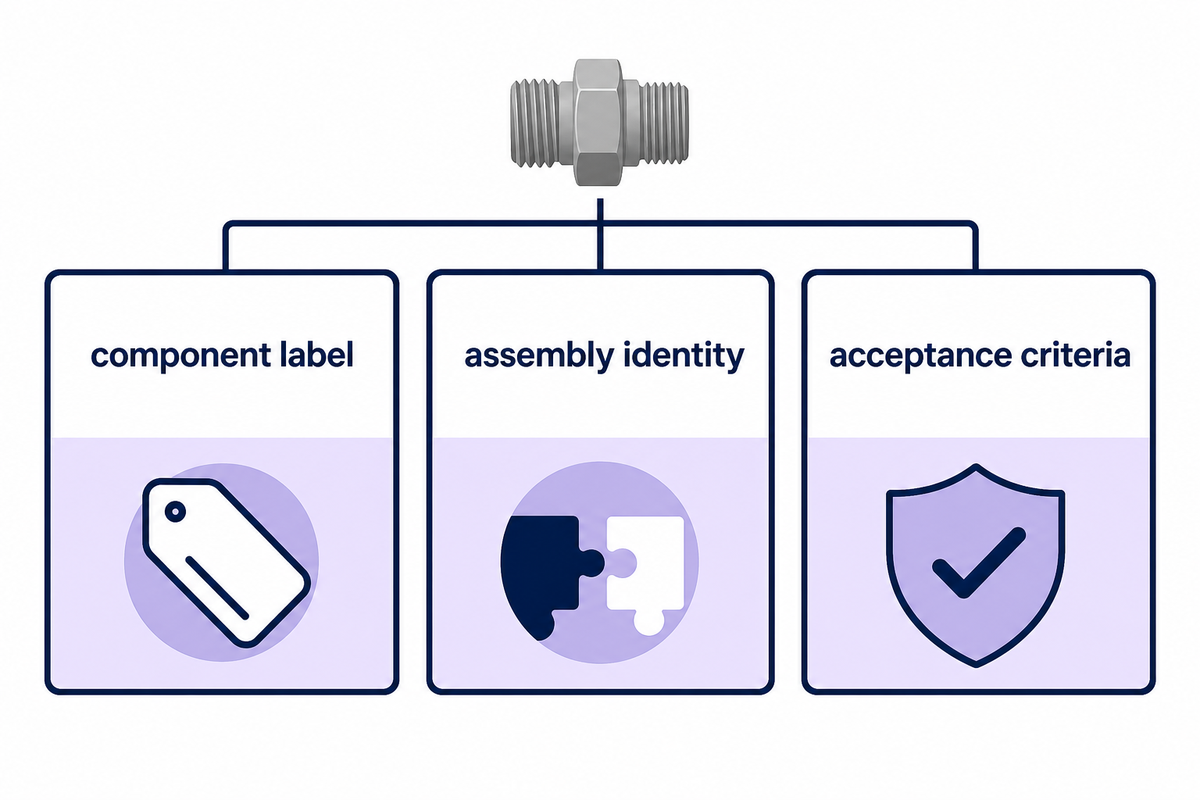
Labels matter. They can be useful starting identifiers for an item in a documented chain. Treating one label as if it were evidence for the complete connection and its use is the mistake. It is not. A relevant record may also need to cover the mating interface, the assembly configuration, the intended fluid and environment, the current condition, the measurement task, and the approved procedure.
Even standards written for test-connection components have defined scope boundaries. ISO 15171-2, for example, distinguishes connection-under-pressure conditions from working-pressure scope. The guide should not convert that distinction into a rating decision for a reader’s machine. Instead, use it as a prompt to ask whether the cited document actually covers the intended connection, fluid, assembly, and operating condition.
When a source uses a unit such as psi, bar, or MPa, retain that unit with its source and scope in the Passport. Units preserve what a record says; they do not convert a single figure into whole-assembly approval or a generic configuration instruction.
Useful record review separates the component label from the assembly identity, machine-side interface, intended measurement, and controlled procedure. ISO 18752’s assembly-level principle is evidence that a headline value from one item is insufficient; it is not evidence that an unlabeled mating path, fluid condition, or instrument setup is acceptable.
Before a request moves forward, identify the document that supplies the applicable acceptance criteria. If no such record is available, log that gap for the responsible technical owner rather than treating a component label as a decision.
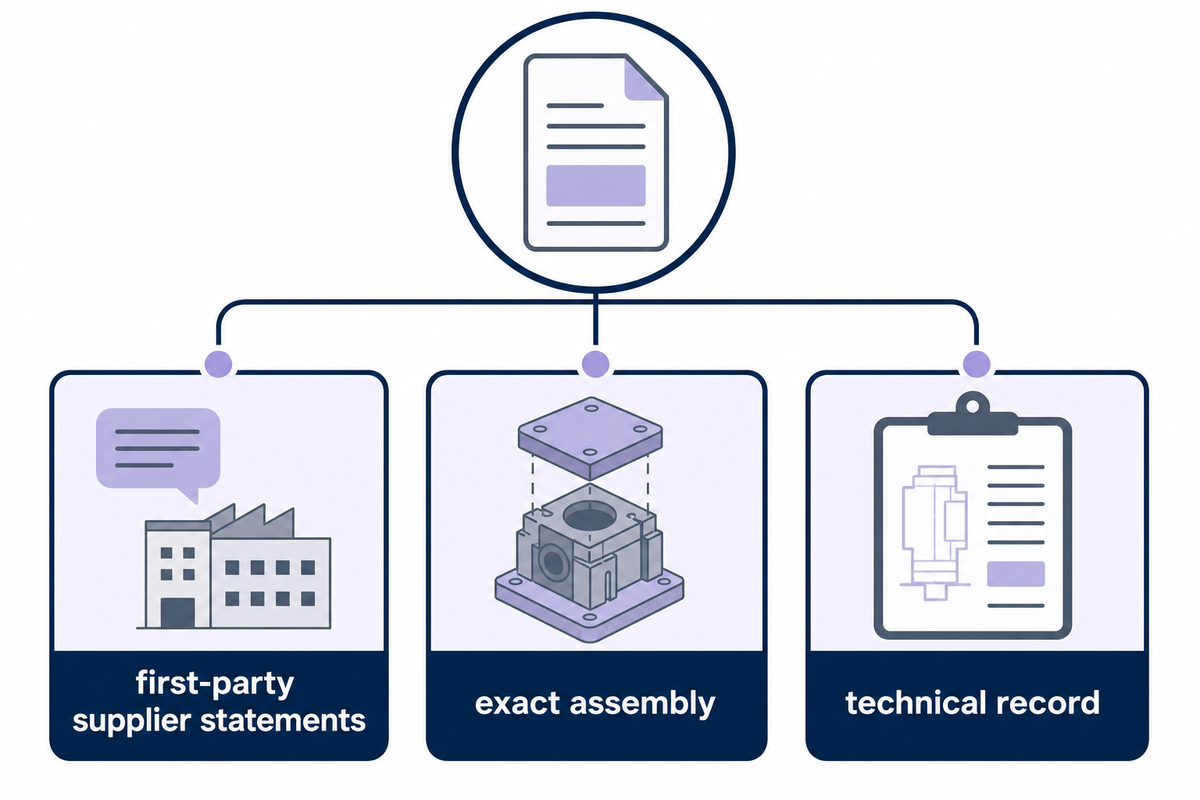
TIME Hydraulic’s supplied company background includes cone-seal, zero-leakage design claims, 100% inspection, and a three-year quality warranty for its hydraulic test-point and hose work. For a buyer, those are first-party supplier statements to request and scope against the exact assembly; they are not universal compatibility evidence for a particular installation.
Do not infer these items
- An end appearance or fitting family doesn’t prove mating compatibility.
- An isolated pressure figure doesn’t prove the whole path is acceptable.
- An apparently clean exterior does not prove condition, internal cleanliness, or suitability for a specific measurement.
- A calibration label does not, on its own, prove that the intended measurement result is fit for the decision being made.
- Previous use on another machine doesn’t establish the current machine’s interface, fluid, environmental, or procedure scope.
If a project has a cleanliness or transfer-contamination requirement, name that requirement and its owner. ISO/TS 18409 treats hose-assembly cleanliness sampling as a separate, limited topic; it does not turn a generic pressure record into a cleanliness record or provide a universal cleaning method. The same discipline applies to fluid compatibility: keep it as an evidence question until the responsible documentation resolves it.
Separate Inspection, Controlled Testing and Escalation
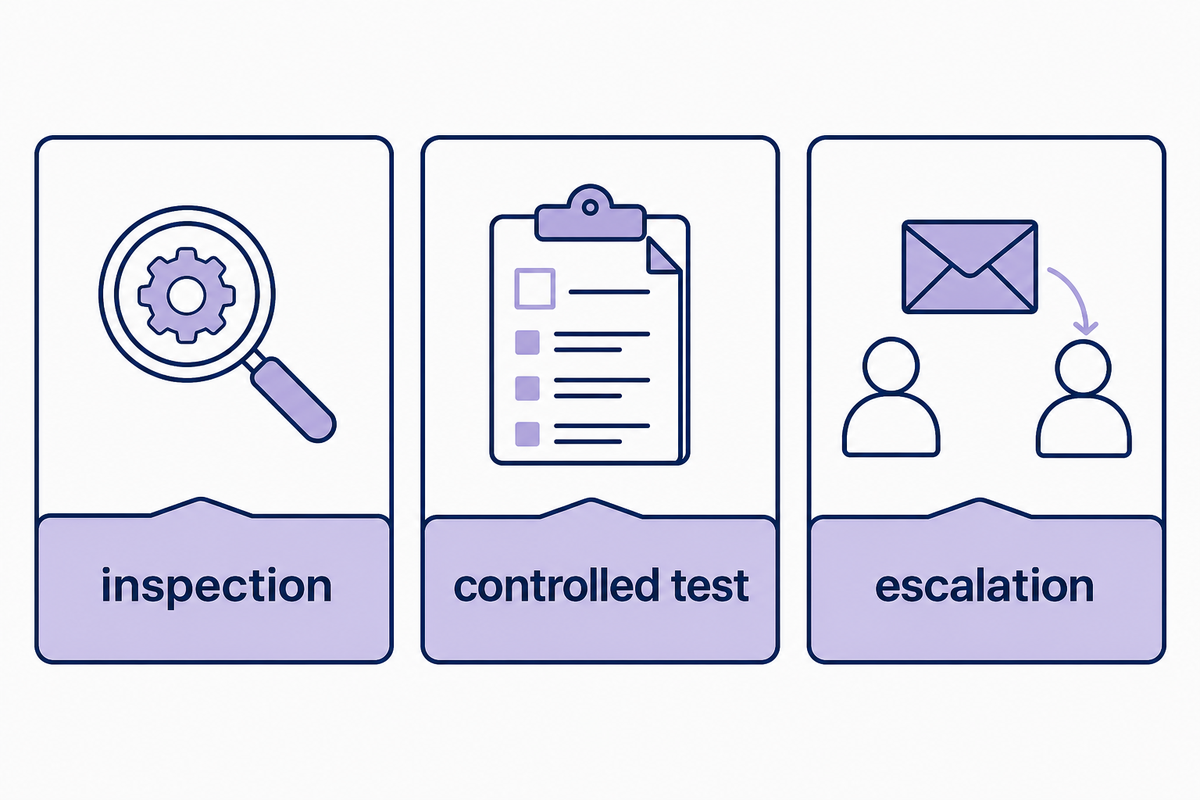
Inspection, controlled testing, and escalation are different activities. An inspection records an observation. A controlled test is governed by a procedure, controls, equipment instructions, and trained responsibility. Escalation transfers an unresolved condition to the owner who can decide what evidence or action is appropriate. Blending these three ideas encourages improvised work, which this guide is designed to prevent.
Pressure testing involves stored energy. The UK Health and Safety Executive’s current fourth-edition GS4 guidance identifies hazards such as test-hose failure and hose whip. The CPA/BFPA good-practice guide also frames externally pressurised systems as a connected system of pump, lines, connectors, adapters, and component, with a need to consider ratings, threads, condition, and compatibility.
Those sources do not justify publishing a universal test recipe. They support a narrower editorial conclusion: a blog cannot tell an unknown machine operator what target, sequence, restraint, exclusion zone, or duration to use. Applicable employer controls, equipment instructions, and approved procedure own those decisions. If a hose, fitting, access point, or instrument record is incomplete, the correct handoff is to the designated technical or safety authority.
For the same reason, descriptions such as “inspection complete,” “connection checked,” or “gauge calibrated” should be read as the beginning of a question, not its end. What was inspected? Which connection path was considered? What requirement defines an acceptable measurement? Which procedure applied on that equipment? Concise answers with source references are more valuable than a broad assurance that no one can audit later.
Where a concern is discovered, the guide’s role ends at preserving the observation and directing it to the proper owner. It does not tell readers to continue work, dismantle a connection, expose a pressurised system, or adopt a particular corrective act. Those choices depend on the current equipment condition and controlled work process, neither of which can be established by an article.
This boundary is especially important when a reader is under time pressure. Quick measurement results are only useful if the team knows what was measured, through which documented path, under which controlled conditions, and with what limitations. Records of uncertainty are safer and more useful than confident but unsupported claims that a connection is “fine.”
Turn an Inspection Observation Into an Evidence Handoff
Many useful maintenance observations are not verdicts. Technicians may see a leakage sign, routing contact, exterior damage, a changed component, a missing tag, or an undocumented repair. Each can start a productive handoff, but none should be translated automatically into a universal replacement decision or a configuration instruction.
For escalation, a simple record can state: what was observed; where and when it was observed; which record is missing or conflicts; what service or machine documentation is available; and who has authority to determine the next action. That makes the next conversation specific. It also keeps an observation from being exaggerated into a conclusion that the available evidence cannot support.
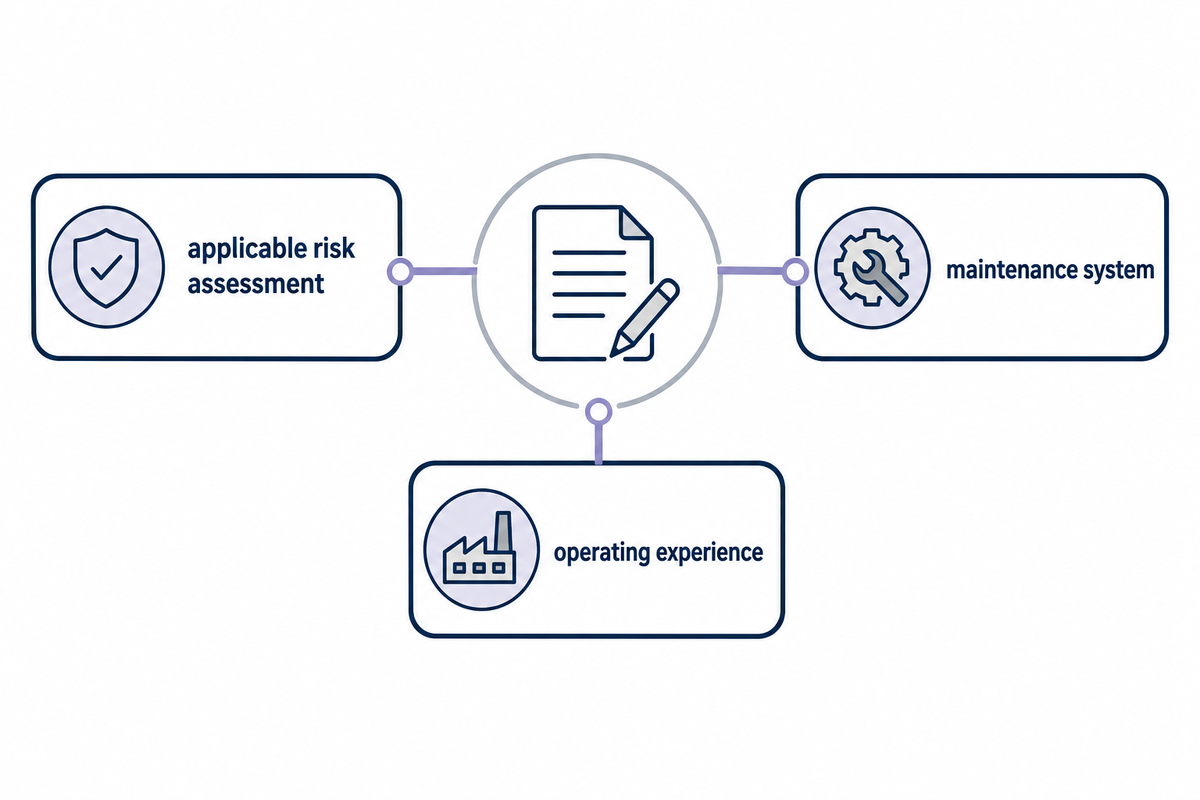
Inspection frequency belongs to the applicable risk assessment and maintenance system. HSE guidance on work-equipment inspection identifies factors such as manufacturer recommendations, industry advice, use, workplace conditions, the environment, and operating experience. That HSE page is general work-equipment guidance, not a hydraulic-hose replacement schedule; it supports this guide’s decision not to issue one universal interval for all hydraulic hose assemblies. An organisation may lengthen or shorten an interval as its evidence and risk assessment require.
Counterintuitively, an apparently tidy connector is not always enough evidence. CPA/BFPA guidance notes that movement around a connector can create weakening that may not always be obvious from visual examination. Rather than replace every item that looks imperfect, record what is seen, identify what cannot be seen or confirmed, and send the unresolved point to the person and documents that own the decision.
What a Buyer Should Request From a Hydraulic Test Hose and Fittings Supplier
Supplier conversations are stronger when they start with the Passport rather than a broad request for a part that “should fit.” For the actual request, ask what documentary evidence can be supplied and what scope it covers. Useful questions include:
Where documentation does not identify scope or application limits, the gap creates a procurement risk: an enquiry can be mistaken for an approval request. If an accredited-lab record or documented certification scope is relevant, it must be tied to the exact request rather than used as a generic approval.
- What is the identity, reference (if applicable), revision, and date of the requested assembly or component as recorded in its associated documentation?
- Which machine-side interface and intermediate connection information is required before technical confirmation?
- What compatibility or application limits are documented for the request, and which items remain customer- or OEM-controlled?
- What assembly, inspection, traceability, or change-control records are available where applicable?
- Who is the named owner when the buyer’s evidence set is incomplete or conflicts with the supplier’s understanding?
Separate a supplier statement from a request-specific technical record. For this guide’s evidence-handling approach, certifications, facility descriptions, warranty statements, inspection claims, and customer references are treated as first-party information until the buyer receives documents that identify the relevant product, scope, conditions, and limits. This is not distrust; it is a way to prevent broad marketing language from being misused as an engineering approval.
For brand identity, IKIN is a registered trademark and TIME Hydraulic is the operating company, according to the company information supplied for this article. Treat any additional TIME Hydraulic capability or quality statement as first-party until it is supported by documents appropriate to the exact request. That protects both the buyer and the supplier from overextending a general claim.
This approach also makes quotation work more efficient. Suppliers do not need every possible operating detail before acknowledging an enquiry, but the buyer should make clear which facts are documented and which need confirmation. With a well-framed request, the buyer can ask for the relevant evidence, identify the governing equipment documentation, and establish who will make the final technical decision. It should not ask the supplier to turn an incomplete description into an unconditional approval.
Hand Confirmed Information to the Existing Solution Page
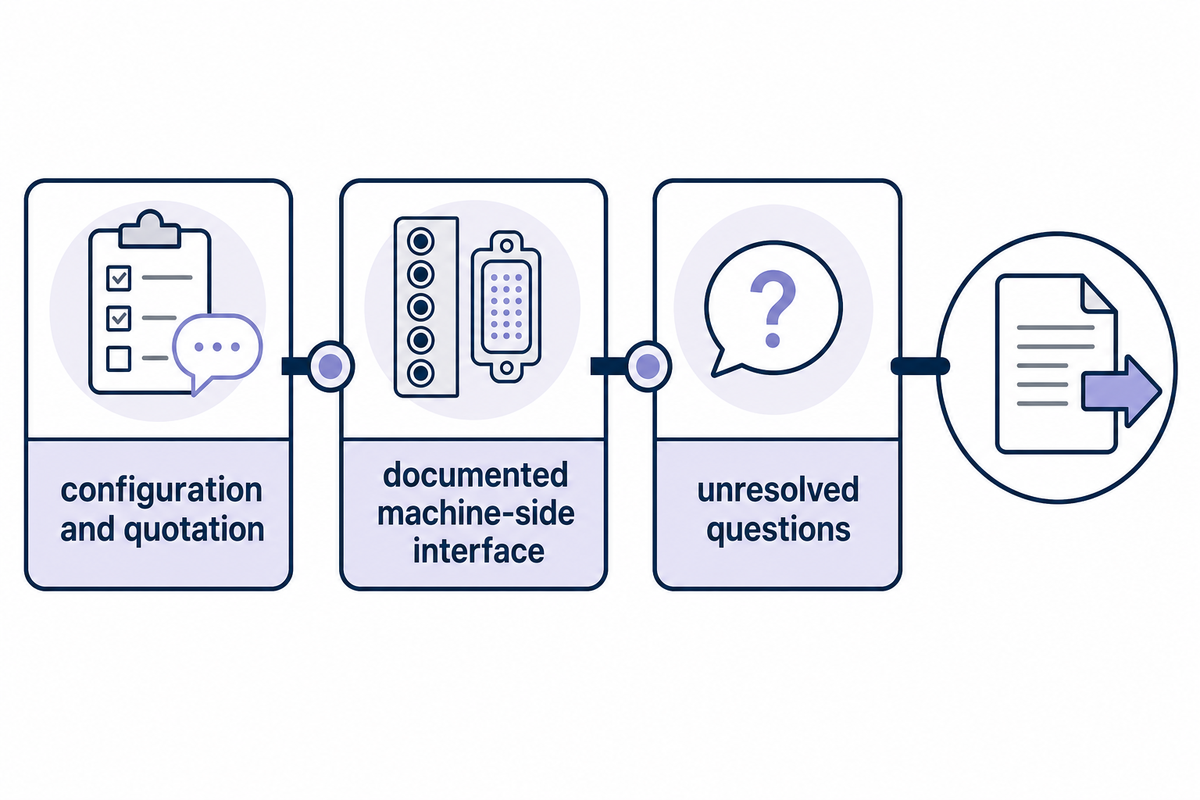
When the relevant records are available, the commercial next step isn’t another general guide. It’s a configuration and quotation conversation using the existing Hydraulic Test Hoses & Fittings solution page. Provide the documented machine-side interface, known connection path, assembly evidence, measurement purpose, and unresolved questions so the request can be routed efficiently.
This article intentionally does not provide a DN or model selector, a thread-identification chart, a bore calculator, a pressure-rating checker, a catalogue comparison, or an RFQ builder. Those would compete with the solution page’s commercial purpose and would invite the reader to substitute a generic blog for a request-specific technical review. If the Passport is incomplete, say so in the enquiry and ask what documents or qualified review are needed before any configuration is proposed.
This distinction is useful for searchers as well as buyers. This guide explains how to frame an evidence-led test-connection request; the solution page is where a documented request can be routed toward the relevant product family and quotation process. Keeping those jobs separate prevents two pages from making the same promise and gives the reader a clearer next step.
Frequently Asked Questions
What should be confirmed before connecting a hydraulic test hose?
Confirm the documented machine-side interface, the known connector path, the hose-assembly evidence, the measurement purpose and approved instrument information, and the procedure or escalation owner. This is a planning check, not permission to improvise a connection. If any record is missing, preserve that uncertainty and obtain the relevant drawing, specification, or qualified technical review before configuration or controlled work. Useful enquiries can also state the machine identifier, document revision when known, and the reason the result is needed, so the next reviewer understands which unknown matters first. They can distinguish a known document from an observation that still needs confirmation.
Is a working-pressure label enough to approve a test connection?
No. One label can be part of the evidence, but it cannot approve the documented interfaces, complete assembly, intended fluid and environment, condition, measurement purpose, or approved procedure. ISO and industry guidance show why scope and whole-system context matter. If the evidence does not align, technical review is the appropriate next step rather than a guessed adapter, hose, or test condition.
How should a buyer compare hydraulic test hose and fitting suppliers?
Compare the evidence a supplier can provide for the actual request: a clear identity or drawing reference, applicable scope information, relevant compatibility evidence, assembly or inspection records where applicable, and a named owner for changes or unanswered questions. Do not treat a marketplace listing, a broad marketing statement, or a brand name as a substitute for documents that match the requested configuration and conditions. Ask how the supplier will handle missing information, how a documented change is communicated, and which supplied record belongs to the exact request rather than a broader product family. Buyers can then compare the clarity of the evidence handoff, not just the apparent completeness of a sales description. This approach also makes it easier to record why a supplier cannot responsibly confirm a request yet, which is a useful outcome rather than a failed conversation.
How often should hydraulic hoses be tested or replaced?
This guide does not provide a universal interval. Service conditions, equipment instructions, construction, operating environment, and an organisation’s maintenance process can differ materially. Use the inspection and maintenance information applicable to the machine and assembly, then record observations that need review. If condition or connection evidence is unknown, do not use a generic web interval to approve continued service. An interval in a maintenance plan should be traceable to the relevant risk assessment and responsible owner.
References & Sources
- ISO 18752:2025, Hydraulic rubber hoses and hose assemblies
- SAE J1273, Recommended Practices for Hydraulic Hose Assemblies
- ISO 15171-2, Hydraulic fluid power couplings
- UK HSE GS4, Safety in pressure testing
- UK HSE, Inspection of work equipment
- UK HSE, Hydraulic fluid safety guidance
- NIST, Metrological Traceability FAQ and policy
- CPA/BFPA, Safety when externally pressurising hydraulic systems
- ISO/TS 18409, Hose-assembly cleanliness sampling scope
PAGE & COMPANY CONTEXT
This page is intended to help industrial buyers understand a practical hydraulic diagnostic path: test point, microbore hose and pressure-gauge connection.
For the site’s published company background, visit About. For inquiry details, visit Contact; information-handling details are available in the Privacy Policy.
TIME HYDRAULIC / IKIN
Hydraulic test-connection context for business inquiries
- Manufacturing context
- Changzhou Time Machinery Technology Co., Ltd., Changzhou, Jiangsu, China.
- Trade and export context
- Shanghai Ikin Hydraulic Co., Ltd.
- Product focus
- Hydraulic test points, DN2/DN3/DN4 microbore hose assemblies and pressure gauge connectors.
Since 2017
The public About page describes production activity since 2017.
Site-stated scale
The public About page states a 5,000 m2 plant and supply to 40+ countries.
Site-stated controls
The public About page describes ISO 9001, SGS, 100% inspection and a three-year warranty.