
Get in touch with TIME Company

Bulkhead & Stud Test Points
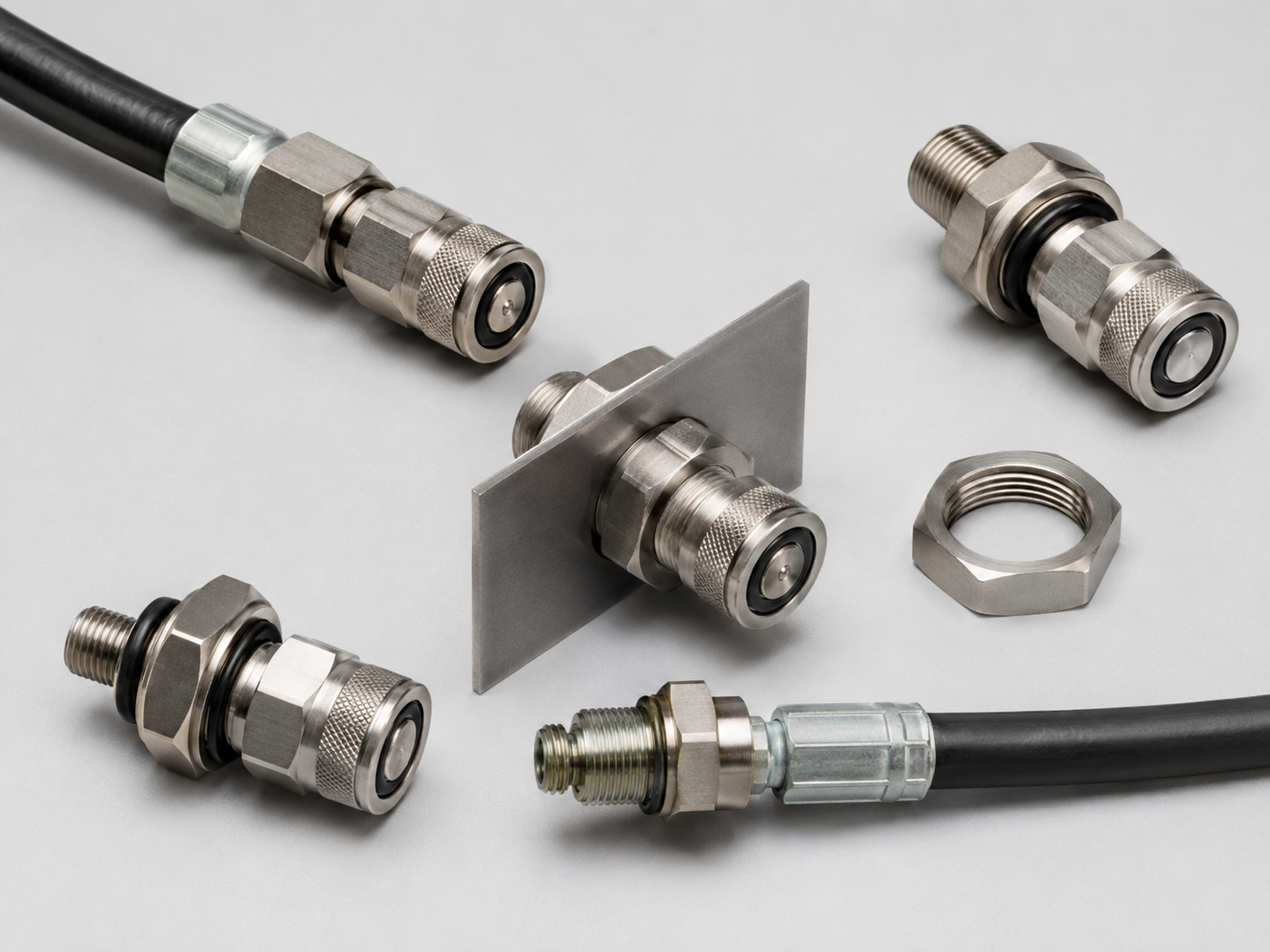
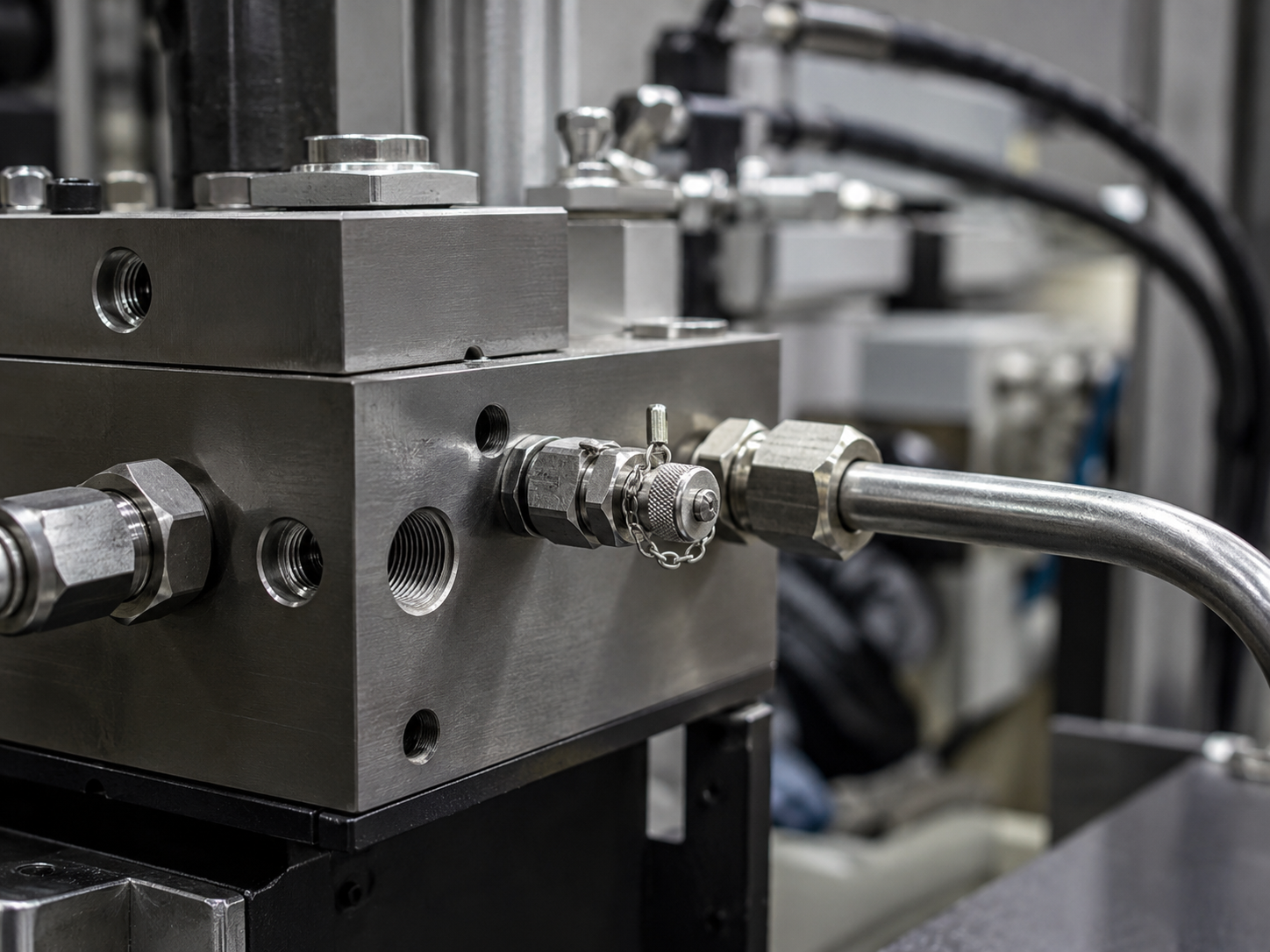
A bulkhead hydraulic test point is specified by separating the panel mount, diagnostic connection, machine-side thread and downstream tube or hose interface. TIME Hydraulic checks all four interfaces before releasing a reliable drawing.
Bring four inputs
-
01Panel thickness and access envelope
-
02Diagnostic coupling or pressure gauge connection
-
03Machine port thread and sealing geometry
-
04Working, test and connection-pressure states
Buyer-Critical Range Commitments
Available specifications describe product families or operating principles, not one universal configuration. The drawing and written offer delivered for the order govern the quoted product.
-
Within 3 daysSample preparation policy
-
DIN 1.0718 / 304 / 316LMaterial choices by model
-
NBR / FKM / EPDMSeal choices by model
-
Every test pointPre-delivery inspection scope
-
3-year warrantyQuality-warranty term
-
Bulkhead and stud familiesMounting and connection routes
The Four-Interface Fit Map
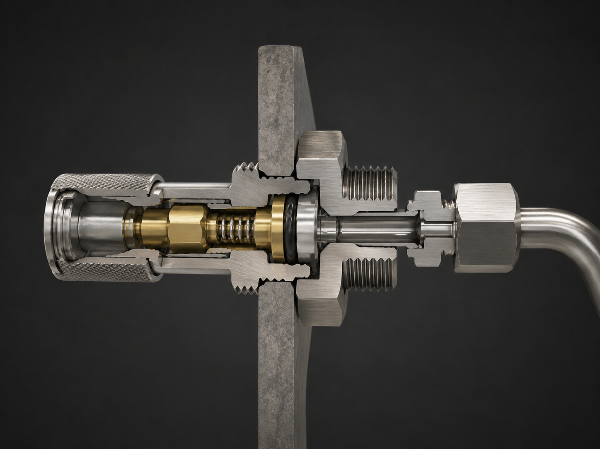
“Bulkhead,” “stud,” and “DKO 24°” describe different parts of the connection stack. Even a matching thread can join the wrong interfaces.
System DiagnosticPanel interface
- Hole, panel thickness
- locknut clearance
- service access
Test interface
- Coupling series, cap
- connector and gauge
- hose route
Port interface
- Thread designation
- male or female form
- seal location, port standard
Tube or hose interface
- DKO 24° geometry
- tube size
- straight adapter
Release rule: if one interface is unknown, the application remains a candidate rather than an approved configuration.
The mistake is to treat one matched thread as a fit verdict; a mismatch can remain at any of the four interfaces, so confirm against the current drawing. These interface names are not interchangeable.
We manufacture only hydraulic test points and test hoses.
That narrow manufacturing scope keeps the discussion on diagnostic access rather than a general catalogue of hydraulic equipment.
Our range includes bulkhead hydraulic test point models for through-panel installation. Our range includes stud connection test point models with a DKO 24° connection option.
- Use a bulkhead mount when diagnostic access must pass through a panel or bracket.
- Define the machine-side stud by its complete thread and sealing form, not nominal diameter alone.
- Treat a DKO 24° end as a tube or hose connection attribute, not proof of the machine port.
- Confirm the diagnostic test coupling series before selecting the hose, gauge or adapter.
Bulkhead route
Useful when technicians need a fixed, accessible hydraulic test port away from a crowded machine connection.
Drawing input:
panel and access envelope
Stud route
Useful when the test point fitting connects directly to a defined machine-side port or adapter.
Drawing input:
full port designation
Combined route
Useful when a panel-mounted test point also needs a documented tube, hose or fitting connection downstream.
Drawing input:
all four interfaces
Material Choices Follow the Fluid and Environment
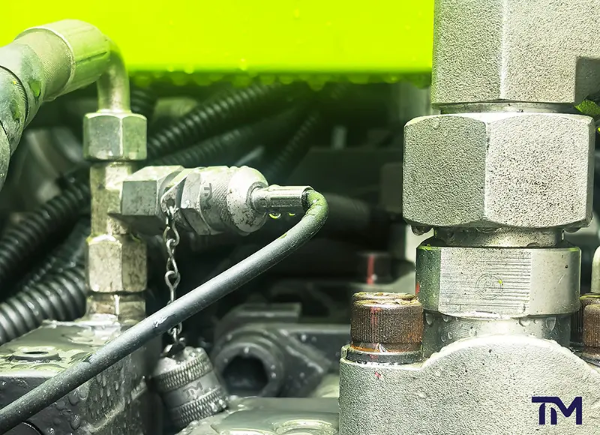
DIN 1.0718 carbon steel, 304 stainless steel and 316L stainless steel are available by model. Material selection should follow the actual fluid, external atmosphere, cleaning regime and mating components.
-
DIN 1.0718
A carbon-steel option for specified industrial environments and defined surface treatment.
Specification -
304 stainless steel
A stainless option to review where general corrosion exposure affects the specification.
Specification -
316L stainless steel
A separate option when the application review requires it.
Specification -
Mixed metals
Review galvanic pairing, trapped moisture and electrical contact across the installed assembly.
Specification
Seal-family boundary
Model options include NBR, FKM and EPDM seals. A seal-family name is a selection input, not proof that a specific compound is compatible with every fluid, temperature or cleaning agent.
Confirm the fluid name, concentration, maximum and minimum temperature, exposure duration and any washdown chemistry.
Compatibility boundary
A seal-family name does not prove fluid compatibility. A seal family is not a substitute for compound-level fluid and temperature evidence.
Finish Labels Need a Corrosion Context
Zinc and Cr(VI)-free zinc-nickel finishes are available for carbon-steel models. A finish name alone does not establish a service-life ranking because substrate preparation, coating specification, handling, assembly damage and the field environment all matter.
| Selection input | What to record | What it does not prove |
|---|---|---|
| Finish system | Coating type and the applicable drawing or purchase specification | A universal number of field years |
| External exposure | Indoor, outdoor, splash, salt, chemical or washdown conditions | Performance in an untested environment |
| Mating metals | Panel, tube, hose end, fasteners and nearby conductive materials | Freedom from galvanic interaction |
| Verification method | Requested test standard, duration, acceptance criterion and specimen condition | A direct prediction of field life |
Evidence boundary: ASTM B117 describes a controlled salt-spray practice for comparative corrosion information. Salt spray is not a substitute for field correlation. The standard warns against treating that result as a direct predictor of natural-environment performance unless correlation has been established.
Standards Boundaries and Release Data
A single pressure value can refer to different operating states. Even a correct drawing does not establish rated performance.
Qualification boundary: The risk is a false rating because a dimensional match proves geometry only; the figures below are external standards scopes, not TIME product ratings. TIME Hydraulic separates the working, diagnostic test and connection-under-pressure states before it reviews the applicable model. A drawing is not a substitute for model qualification.
| Reference or value | Published scope | Release rule |
|---|---|---|
| ISO 15171-2:2016 | Diagnostic couplings with an M16 × 2 connection end for hydraulic systems | Confirm the requested product follows the cited connection and current drawing |
| 40 MPa / 400 bar | ISO 15171-2 scope for connecting a pressure-measuring device while the system is under pressure | Do not convert this standards boundary into a family-wide TIME claim |
| 63 MPa / 630 bar | Conditional maximum working-pressure scope stated by ISO 15171-2 | Require model-specific rating and conditions before order release |
| ISO 8434-1:2018 | 24° cone connectors using cutting ring and O-ring seal cone, including DKO-style geometry | Confirm connector form, tube size and application testing |
| 4–42 mm | Outside-diameter range for steel tubes in the ISO 8434-1 scope | Use the actual tube and connector dimensions from the drawing |
| SAE J1502_202205 | General-use hydraulic diagnostic couplings and dimensional interface requirements | Dimensional conformance does not replace manufacturer performance testing |
| 42 MPa | Nominal working-pressure scope stated in SAE J1502 | Separate system working pressure from test and connection-under-pressure states |
Price and Lead Time Depend on a Frozen Configuration
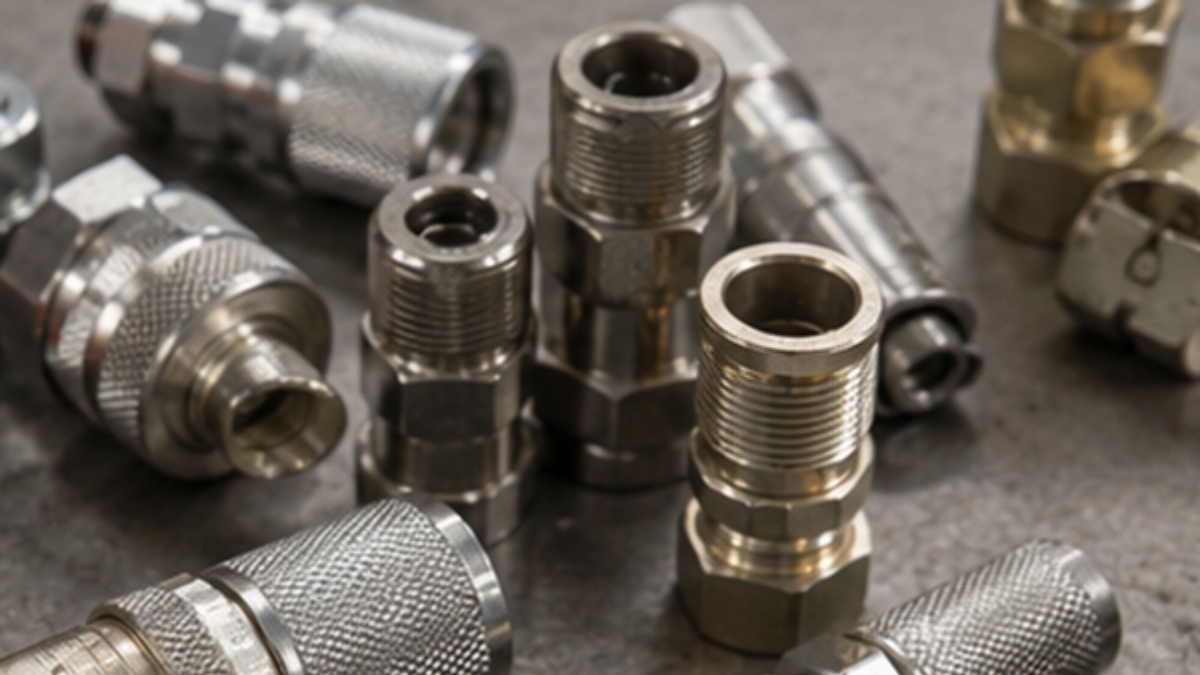
TIME does not use one price for all bulk hydraulic test points because material, finish, connection thread, quantity, packaging and inspection documents change the quotation. Submit a complete interface stack for a current written offer.
Samples can be prepared within 3 days; logo customization is available. Production lead time and minimum order quantity remain quotation-specific and should be confirmed in writing.
-
GeometryBulkhead dimensions, stud connection, tube or hose end and cap requirementModel route or drawing review
-
Material and sealSteel grade, seal family, fluid and temperature envelopeMaterial-bound quotation
-
Surface and markingFinish specification, logo and traceability markingProcess and artwork confirmation
-
Quantity and deliverySample quantity, production quantity, destination and requested dateCurrent price and production schedule
-
Evidence packDrawing, inspection record, material record or requested test evidenceDocument scope stated on the offer
Inspection and Qualification Serve Different Purposes
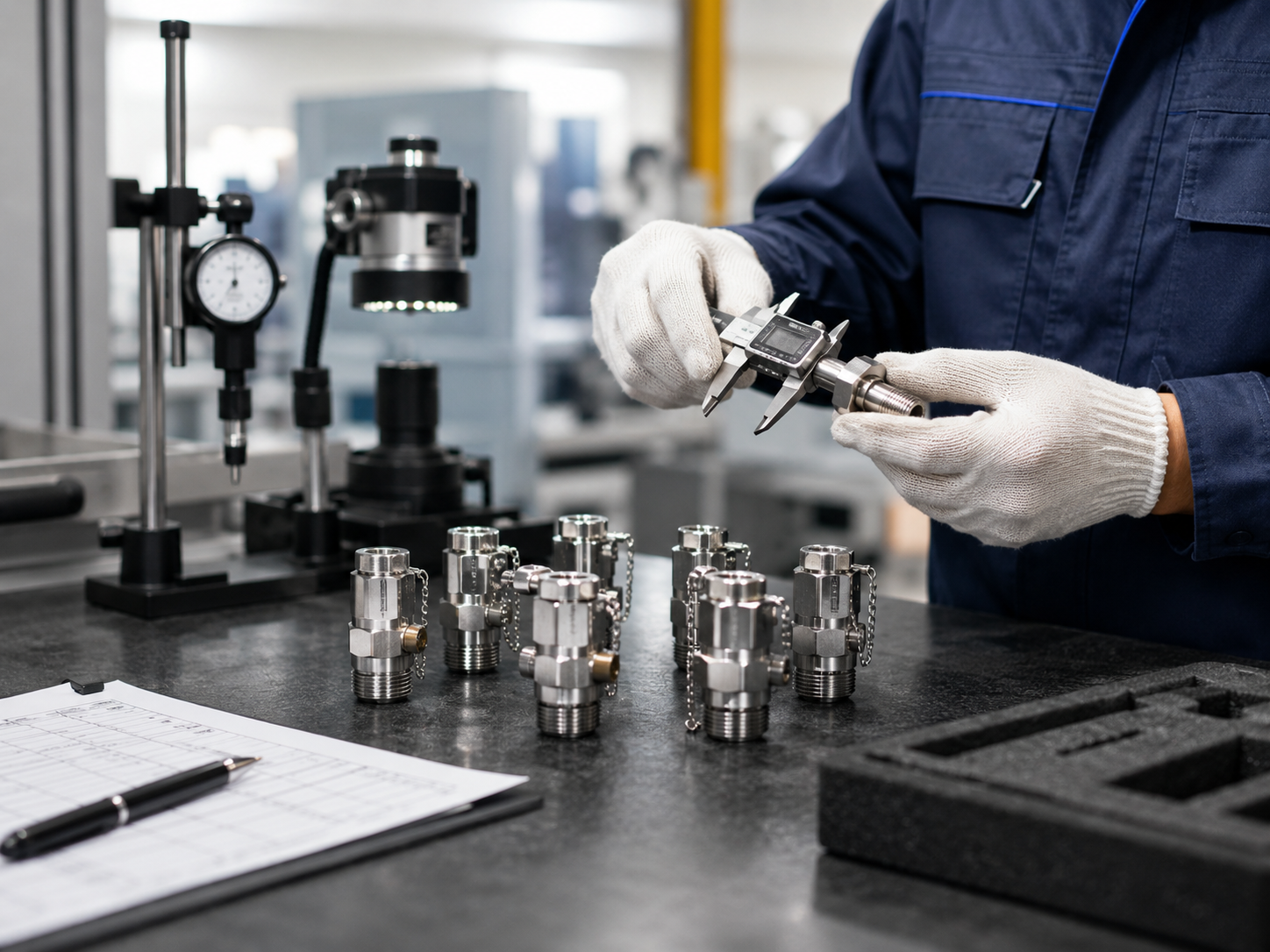
We inspect every test point before delivery. That inspection supports outgoing conformity, but it does not by itself establish model qualification for every pressure, fluid, temperature or connection condition.
-

Confirm the drawing revision and released configuration.
-
Match inspection records to the agreed order scope.
-

Keep steel and stainless-steel part traceability linked to the order.
-

Request application-specific validation when the service condition demands it.
Engineering Statement
“A usable release starts with four separate records: the mount, the diagnostic end, the machine-side end and the tube or hose end. If one is unknown, the drawing stays open.”TIME Hydraulic Engineering Team
Cone-seal scope
We use cone-seal geometry in these diagnostic test point designs. The geometry supports a defined sealing interface, but TIME does not use it as a universal zero-leakage promise across uncontrolled applications.
Warranty & Traceability
We maintain raw-material traceability for steel and stainless-steel test point parts. These test points carry a 3-year quality warranty.
Warranty terms do not replace correct application selection, installation practice or maintenance. Ask TIME to identify the written warranty scope for the quoted model and order.
A Revision-Bound Path from Inquiry to Release
This workflow keeps the commercial offer attached to the interface data reviewed by engineering. A change in port, panel, pressure state, material or seal reopens the affected decision.
Close the input gaps first: use the three tools to structure the engineering data, then request a drawing review with the same RFQ revision. The tools organize evidence; they do not approve a product.
-
StageTIME actionBuyer decision
-
1. IntakeClassify the four interfaces and pressure statesSupply dimensions, photographs and application data
-
2. Technical reviewIdentify a catalogue candidate or drawing routeResolve every open interface and compatibility point
-
3. Commercial reviewQuote the frozen configuration and document scopeConfirm quantity, marking, delivery and acceptance needs
-
4. SamplePrepare the agreed sample configurationApprove fit and application validation plan
-
5. ReleaseUse the approved revision for production and inspectionControl changes through a new written review
Product Families Shown on the Legacy TIME Site
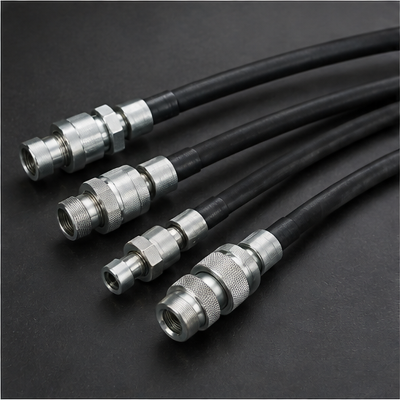
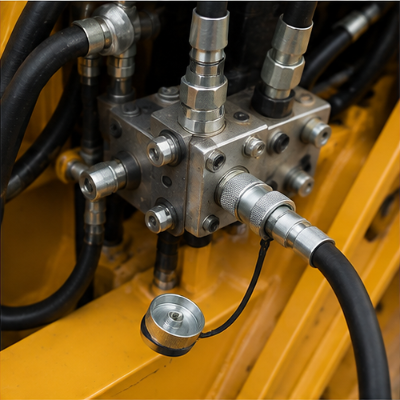
These images are TIME product references carried from the company’s legacy website. They identify product families, but an image is not dimensional, material or pressure evidence for a new order.
- Bulkhead hydraulic test point family for through-panel diagnostic access.
- Stud connection hydraulic test point family; confirm the exact machine and downstream interfaces.
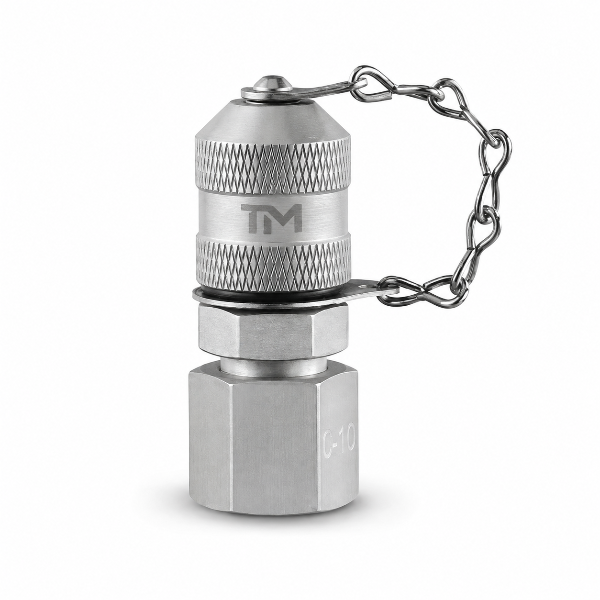
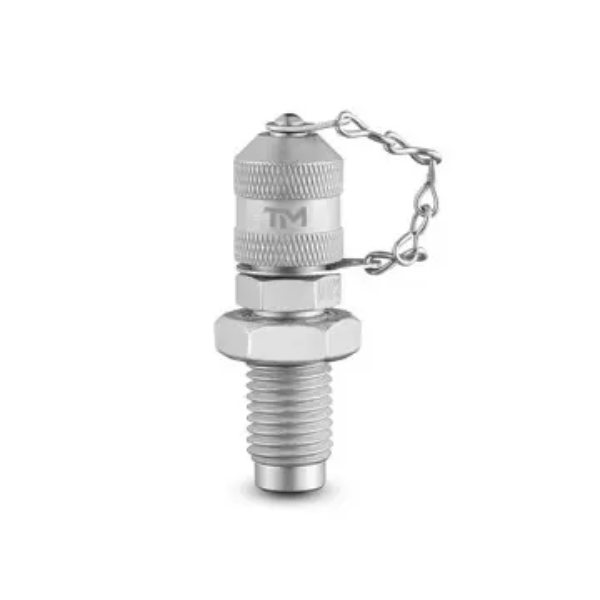
TIME products support industrial hydraulic diagnostics and pressure-testing access through model-bound bulkhead and stud connection options. Buyers can request drawings and engineering support for the exact equipment and environment.
Match Product Images to a Drawing5,000 m²
TIME Hydraulic operates a 5,000 m² production facility in China.
Focused manufacturing
Test points and test hoses are the company’s stated manufacturing scope.
Brand identity
IKIN is our registered trademark, and TIME Hydraulic is the operating company.
Cases That Need a Different Route or More Evidence
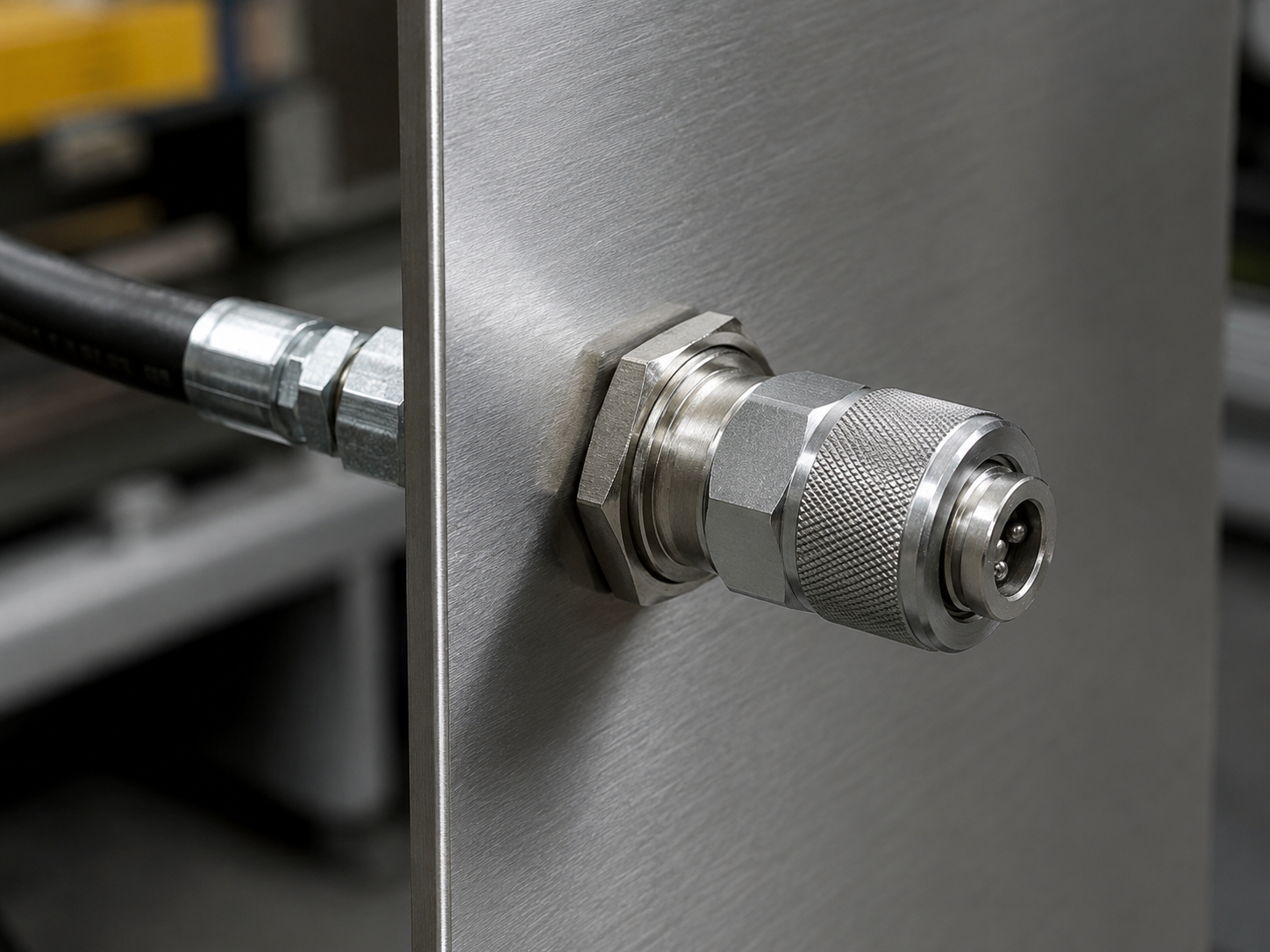
No bulkhead or stud test point is automatically suitable for every hydraulic application. TIME pauses model release while an interface, pressure state, fluid compatibility or evidence requirement remains undefined.
-
Do not select by thread nickname
Labels such as M16, NPT or SAE can omit pitch, male or female form, seal location and port geometry.
Neededfull standard and drawing dimensions
-
Do not infer rating from size
A connection that fits dimensionally has not thereby demonstrated hydraulic performance.
Neededmodel-specific rating and validation scope
-
Do not infer fluid compatibility
NBR, FKM or EPDM identifies a family, not the complete behavior of a selected compound.
Neededfluid, concentration, temperature and exposure
-
Do not infer field life from salt spray
Comparative laboratory corrosion data are not a universal service-life calculator.
Neededenvironment and agreed acceptance evidence
-
Do not connect under pressure by assumption
The allowed connection state must come from the model and applicable standard.
Neededworking, test and connection-pressure states
-
Do not reuse an obsolete revision
A changed panel, port, seal, finish or hose can invalidate the previous fit decision.
Neededcurrent revision-bound release card
Bulkhead & Stud Test Points Engineering Tools
Analyze machine-side and tube interface geometries. Verify sealing compatibility across the diagnostic assembly.
Evaluate working, peak, and connection pressure thresholds. Ensure safe operation within defined fluid and temperature limits.
Compile validated technical specifications. Generate standardized qualification and dimension records for precise inquiries.
Bulkhead and Stud Test Point FAQ
What is a bulkhead hydraulic test point?
It is a diagnostic access fitting mounted through a panel or bracket.
Is a stud connection the same as a DKO 24° connection?
No. The stud can describe the machine-side interface, while DKO 24° describes a tube or hose connector geometry elsewhere in the assembly. Record both ends, their dimensions and the sealing form on the same revision before selecting a fitting.
Which materials and seals are available?
Model options include DIN 1.0718 carbon steel, 304 stainless steel, 316L stainless steel, NBR, FKM and EPDM. Compatibility remains model- and application-specific.
Can I select a test point from pressure and thread alone?
No. A thread name can omit pitch, seat and seal location, while one pressure number can hide working, test and connection states. Panel access, fluid, temperature, material, downstream geometry and the current qualification evidence also affect release.
How quickly can TIME prepare a sample?
Samples can be prepared within three days; confirm dispatch in the quotation.
Does every part receive inspection?
TIME inspects every test point before delivery. That outgoing check is separate from model qualification and from application validation, so define any required test report, acceptance criterion and record retention in the inquiry.
What should I send for a drawing review?
Send the panel hole, thickness and clearance; diagnostic coupling; full machine-port designation; and tube or hose interface. Add the three pressure states, fluid, temperature limits, material and finish preferences, quantity, destination and required records. Photographs can support identification, but dimensions and a current revision still govern the review.
Can TIME quote bulkhead couplings for an existing brand series?
Yes, as a review request rather than an automatic interchange. Send the existing drawing and operating conditions; a STAUFF category reference alone is insufficient.